
Dolce Vita Coliving Review (2026): The Diffused Village Coliving in the Heart of Umbria — Vallo di Nera, Italy
Honest Dolce Vita Coliving review (2026). Launched in 2024 in Vallo di Nera — one of Italy's Most Beautiful Villages — a diffused coliving and coworking space spread across restored medieval homes in the green heart of Umbria, two hours from Rome and Florence. 10 Gigabit fiber internet, organised excursions, truffle hunts, rafting, dog-friendly community, and a village that functions as your living room. From €599/month. This is what it's actually like.
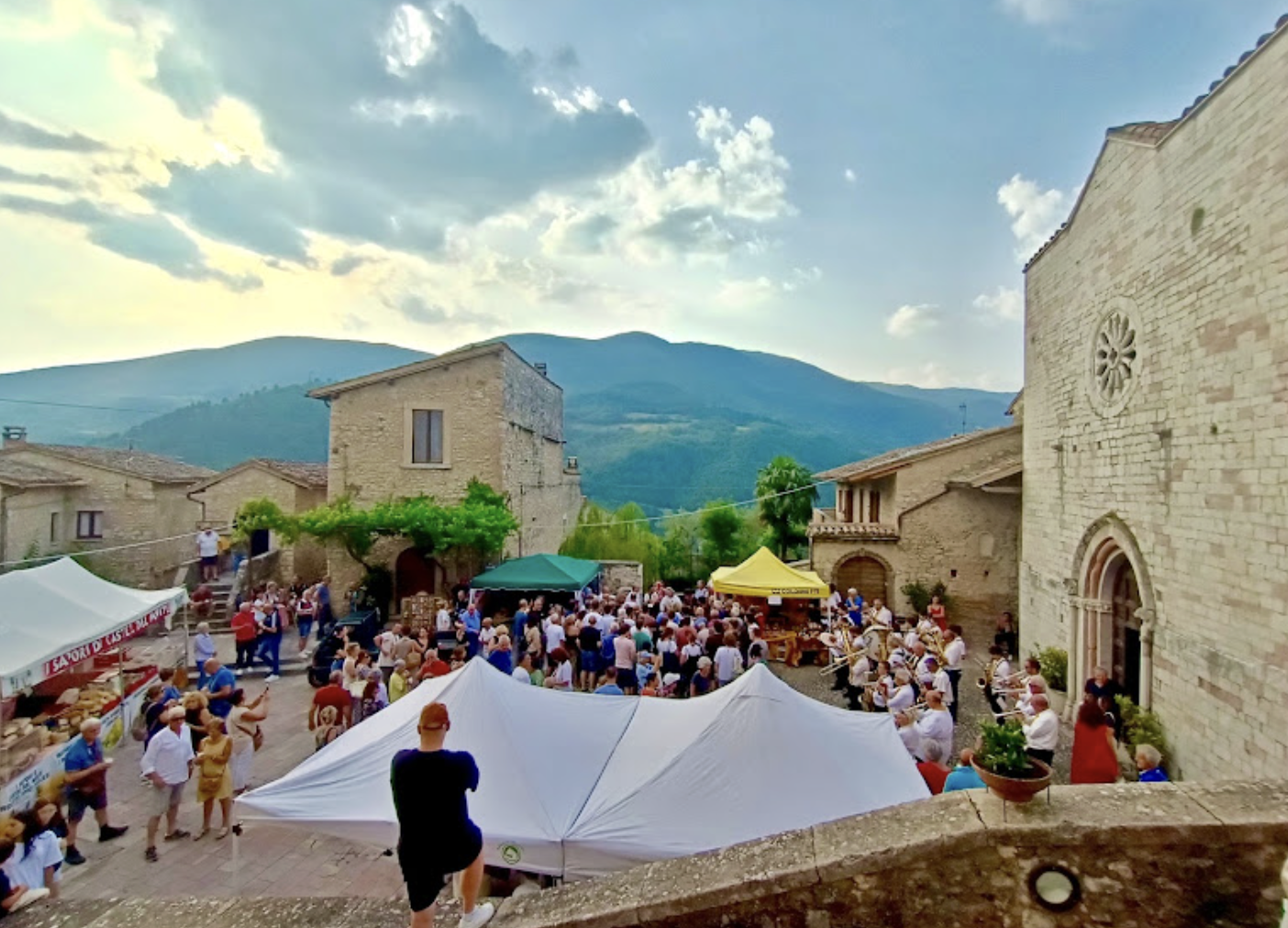
What Is Dolce Vita Coliving?
There is a category of coliving built inside a building, and then there is Dolce Vita — built inside an entire village.
Dolce Vita Coliving launched in 2024 in Vallo di Nera, a medieval hilltop settlement of 355 inhabitants in the Valnerina Valley of Umbria, central Italy. It holds the designation of one of I Borghi più belli d'Italia — the Most Beautiful Villages in Italy — and has been awarded the Orange Flag by the Italian Touring Club for excellence in tourism, hospitality, and environmental quality. It is also officially a City of Truffles and a Bee-Friendly Municipality. These are not marketing claims. They are the accumulated accolades of a village that has existed, in more or less its current form, since the 13th century.
What Dolce Vita's founder Riccardo has done is introduce a model called diffused coliving into this setting: private bedrooms, a coworking space, a professional kitchen and dining area, a lounge, and a communal yard are not contained in one building, but distributed across several beautifully restored medieval homes within the village, all within a 3-minute walk of each other. Residents move between them through narrow stone alleys, past a café serving homemade focaccia, two family-run trattorias, and a small grocery. The village is not just a backdrop. It is the coliving.
The closest international hubs — Rome and Florence — are two hours away by train. The nearest town, Spoleto, is 20 minutes by bus. Between those anchors and this hilltop: Umbrian forests, truffle grounds, the Nera River for rafting, ancient shepherd trails for cycling, and a pace of life that multiple guests have described as cinematic, in the literal sense — a place that does not feel quite real until you have been living in it for a week.
This review tells you what that actually means in practice — including the things that don't show up on the website.
Dolce Vita Coliving is best for:
✓ Remote workers and digital nomads craving slow living with genuine Italian immersion ✓ Creatives — writers, designers, artists — seeking an inspiring, unhurried environment ✓ Solo travellers wanting an instant community in an extraordinary setting ✓ Couples looking for a romantic but affordable Italian base with real village life ✓ Pet owners — dogs are not just tolerated but celebrated, with organised group dog activities ✓ Anyone who has ever said "I want to live like a local in Italy" and meant it seriously
Book a stay at Dolce Vita → 🌐 dolcevitacoliving.com/book 📍 Via Santa Maria 23, 06040 Vallo di Nera (PG), Umbria, Italy 📞 Schedule a call: calendly.com/dolcevitacoliving/30min
Why Dolce Vita Is Different
Most coliving spaces solve the question of where to put the coworking, the kitchen, and the lounge by putting them inside the same building. Dolce Vita solves it differently: it treats an entire medieval village as the building, and turns the cobbled alleys between houses into corridors.
This is the diffused coliving model — a concept with Italian roots (diffuso means spread out, distributed) that Dolce Vita has applied with particular intentionality. Rather than importing a coliving experience into a location, the experience here is the location. The village doesn't surround the coliving; it is the coliving. When you walk from your bedroom to the coworking space, you pass the café where the locals take their morning espresso. When you eat dinner, it might be at one of two family-run trattorias that have been serving this valley for decades. When the Wednesday market truck rolls in — a thirty-year village tradition — you shop alongside the same people you nodded to this morning on the stone steps.
The implications for community are significant. Riccardo, who runs Dolce Vita and lives on-site as the coliving manager and community facilitator, has built a model where the social life of the coliving and the social life of the village are not separate categories. Get-to-know events with local residents, visits to cheese factories and farms, excursions to neighbouring villages by scenic road — these are not optional extras. They are how the experience is designed to work. Guests arrive as visitors and leave having been, for a few weeks or months, part of something genuinely inhabited.
The 48-hour happiness guarantee — unusual in coliving — is a meaningful signal of confidence. If you don't love it within the first two days, Dolce Vita will refund you and help you find somewhere else. In practice, the reviews suggest that this guarantee is rarely invoked: multiple guests describe arriving with no particular expectations and leaving unable to imagine having gone anywhere else.
The Location: Vallo di Nera and the Valnerina Valley
Vallo di Nera sits on a sunny hilltop above the Valnerina — the valley of the Nera River — at the geographic heart of Umbria. It is a village of exceptional coherence: stone houses built over stone houses, medieval towers still flanking the entrance gates, the 13th-century Church of Santa Maria with its frescoes still intact, flower boxes on every window, and views over the lush green valley that are genuinely without peer in the surrounding landscape.
Umbria itself — nicknamed "the green heart of Italy" — is a region of 2,800 years of history sandwiched between the more internationally famous Tuscany and the Adriatic coast. It is less visited, more genuine, and in many respects more beautiful: medieval hill towns, black truffle forests, Roman ruins, Romanesque churches, the Marmore Falls (among Europe's tallest waterfalls), and a cuisine centred on wild boar, cured meats from Norcia, lentils from Castelluccio, and wines — particularly the deep, complex Sagrantino di Montefalco — that have been produced here for centuries.
Destination | Journey Time |
Spoleto (nearest town, all amenities) | 20 min by bus or car |
Norcia (truffles, cured meats) | 40 min by bus |
Marmore Falls | ~1h 20 min by bus |
Rome (Fiumicino Airport) | ~2h by train to Spoleto + transfer |
Florence | ~3h by car or bus |
Perugia San Francesco Airport | Pick-up available on request |
FS Spoleto train station | Pick-up included |
Getting here without a car is genuinely viable. The E401 bus line runs between Spoleto and Norcia, stopping at Vallo di Nera (or very close to it — Riccardo will drive guests to and from the bus stop, a 3-minute ride). Spoleto train station connects to Foligno, Assisi, Perugia, and Rome. Riccardo also provides complimentary pick-up from Spoleto station, and airport pick-up is available from Perugia San Francesco Airport by arrangement.
Within the village itself, the essentials are already present: a mini-grocery, the café, two restaurants, and the Wednesday mobile market truck. For larger shops, Riccardo organises community car trips to supermarkets at least twice a week — a 10-minute drive. Car rentals in Spoleto expand the regional access significantly for those who want it.
The village's setting is worth stating plainly: it looks like a film set. Multiple reviewers have said exactly this, without irony. The 14th-century towers, the stone alleys, the panoramic viewpoints over the valley where watching the sunset became, for more than one guest, a daily ritual — these things are the physical facts of the experience, and they are not exaggerated.
The Space: A Village as a Coliving, All Within 3 Minutes on Foot
Dolce Vita's facilities are distributed across multiple buildings in the village, separated by 100 to 300 metres of medieval alleyway — a 1 to 3 minute walk. This is not a disadvantage. The walk between spaces is the experience: the morning walk from your bedroom to the coworking space, past the café, through the stone archway, is the thing guests describe in their reviews with the most spontaneous warmth.
The Coworking Space is housed in the village's actual town hall — a detail that most guests seem to find genuinely delightful. It is equipped with spacious desks, monitors, ergonomic chairs (confirmed in reviews), and Wi-Fi powered by the village's 10 Gigabit fibre optic line — among the fastest infrastructure available to any coliving in this guide. Standard hours are 8am to 10pm, with flexibility for early or late access on request. The views from the coworking windows — described by one reviewer as looking out on hills that don't feel real — are a legitimate productivity variable.
The Internet deserves its own mention. Dolce Vita is connected to the village's 10 Gigabit main fibre line (installed by Open Fiber as part of Italy's national broadband rollout), with individual premises receiving either a direct fibre connection or a strong 4G/5G network. For remote workers, this is infrastructure that most cities cannot match.
The Kitchen and Dining Area form the social heart of the community in the central building. The kitchen is fully equipped and professional-grade — regularly cited in reviews as spacious and functional — and is where cooking nights and shared meals take place. It leads into a spacious dining area used for community dinners, pasta-making sessions, and long evenings that turn into something unplanned.
The Lounge blends modern furniture with Italian classic pieces and functions as both a working overflow space and a social area for movies, reading, and casual conversation.
The Communal Yard and Patio provide outdoor working and socialising space — a terrace for aperitivo, a spot under the vines for a laptop, and the kind of outdoor table that makes southern European evenings feel specifically designed for them.
In the village itself: two family-run trattorias (at least one open year-round), a café serving homemade focaccia and cakes that reviewers consistently highlight as exceptional, a mini-grocery for daily needs, and the weekly Wednesday mobile market — fresh produce, local cheeses, and seasonal Umbrian ingredients that make the shared kitchen worth using to its full capacity.
Shared bikes are available for exploring the scenic shepherd paths and cycling routes of the valley. The abandoned Spoleto-Norcia railway — a historic route converted into one of Italy's most scenic cycling trails — is accessible from the area and regularly features in guided excursions.
The Rooms: Private Homes in a Medieval Village
All rooms at Dolce Vita Coliving are private — there are no dormitories. They are spread across several restored village houses, within a few metres of each other, each offering views of either the picturesque village corners or the lush green Valnerina Valley and surrounding mountains.
Single Room — A private single room in a restored village home. Valley or village views. Functional and traditional in feel — stone, terracotta, the texture of buildings that have been lived in for generations. From €168/week | €599/month.
Double Room (1 guest) — A private double room, used as a solo residence. More space, the same views. From €210/week | €783/month.
Double Room (2 guests) — A double room for two, with a supplement of €450/month for the second person built into the combined rate. From €241/week | €900/month.
All room rates include: access to the shared kitchen with basic pantry, the lounge, the coworking space (town hall), in-season vegetables from Riccardo's garden, group activities and experiences, shared bikes, and weekly room cleaning.
Additional benefits: complimentary pick-up from Spoleto train station; get-to-know introductions to village locals; weekend excursions and curated regional experiences; organised dog activities.
The pricing structure explicitly encourages a minimum stay of two weeks, which reflects the community logic of the space — the village immersion deepens considerably after the first few days. One-week stays are available, but the most consistently positive reviews come from guests who stayed a fortnight or longer.
Dolce Vita also offers a 48-hour happiness guaranteeif you don't love it within the first two days, the team will refund you and help you find alternative accommodation. This is an unusual and genuinely confidence-inspiring policy.
The Community: A Village That Becomes Yours
The community at Dolce Vita assembles from a wide demographic range — the team describes a typical age spread of 25 to 70 years, reflecting a coliving that attracts life experience as much as professional profile. The coliving.community reviews include guests from Estonia, the Netherlands, the USA, Italy, Germany, Russia, Malta, and the Canary Islands. What they share is not a professional type but a disposition: curious, open to slow living, interested in Italian culture, and not in a hurry to get anywhere.
Riccardo, who runs the coliving on-site as both manager and community facilitator, appears by name in almost every detailed review — as an excellent host, as someone who "makes the experience unforgettable," as someone who drove guests to the supermarket, organised their truffle hunt, made sure no one missed anything. His presence is the thread that runs through the guest experience consistently: not intrusive, not managed, but genuinely there.
The community programming is deliberately woven into the fabric of village life rather than organised as standalone events. Activities that have been documented across reviews include: river rafting on the Nera, mountain biking through Umbrian valleys, truffle hunting in the forests near Norcia, cheese factory and farm visits, yoga sessions in medieval piazzas, group hikes to scenic viewpoints, dog trekking with certified trainers, a canoeing trip, visits to Spoleto for the Festival dei Due Mondi, and long family-style dinners in the village restaurants. Each week, activities are decided collectively — there is no rigid schedule, but there is always something forming.
The dog community at Dolce Vita deserves specific mention. Pets are not merely tolerated; they are a genuine strand of the coliving's identity. Organised group dog activities with certified trainers are a regular feature — social walks through historical towns, daily hikes, and multi-day dog trekking excursions. Pet sitting is available on request for a small fee. This is one of the most comprehensively pet-friendly colivings in the Italian market.
What People Say
Reviews for Dolce Vita are consistently enthusiastic, with a specificity and warmth that suggests genuine engagement rather than managed marketing:
On the village and the feeling of arrival:
"When I booked Dolce Vita Coliving, I had no idea where I was going. I just showed up… and honestly, I was shocked at how lovely and peaceful this place turned out to be. At first, it feels like you've stepped back in time, but then you realise you're also living right inside this little community." — Verified Google reviewer, September 2025
"The town is just amazing — it's like in the movie, and you can discover many lovely spots." — Verified coliving.community reviewer, May 2025
On the diffused model and the village community:
"The fact that the services and spaces of the coliving are spread throughout the village makes the experience even more charming — you really feel like part of the community. Everyone in the village is so nice, always giving you a small chat." — Verified coliving.community reviewer, September 2025
"The spaces are spread across the village, so every day you're wandering narrow stone streets and passing neighbours who always stop for a smile or a chat. It makes you feel like part of the family." — Verified Google reviewer, September 2025
On the food and the truffle:
"And let me tell you… this place stole my heart because of one thing: the truffle. Every meal with truffle here felt like a little piece of paradise on a plate." — Verified Google reviewer, September 2025
"The two restaurants are very yummy and the café also nice and well-located." — Verified coliving.community reviewer
"One of the things I enjoyed most were the family meals. We often cooked with vegetables straight from the garden that Riccardo cultivates. The freshness and flavour of the produce made every meal special." — Verified coliving.community reviewer, September 2025
On the host:
"Riccardo is an excellent host, with a full range of interesting activities to do in spare time. It's a unique experience which I recommend 100%." — Verified coliving.community reviewer, September 2024
"The experience that Riccardo brings is the major thing for me in this coliving." — Verified coliving.community reviewer, May 2025
On the coworking:
"I really love the coworking place — it's like in a museum." — Verified coliving.community reviewer (on the town hall coworking space)
"The coworking space was excellent, with ergonomic chairs and monitors that made it easy to stay productive. The views from the village are breathtaking, and watching the sunset from one of the many viewpoints became a daily ritual." — Verified coliving.community reviewer, September 2025
On wanting to stay longer:
"What a pity — when I started to really like it here I needed to leave, and I think staying one month would be great." — Verified coliving.community reviewer
"I came here with no plan and no expectations. I left with memories, friendships, and a piece of my heart still sitting somewhere between the village streets and a plate of truffle pasta." — Verified Google reviewer, September 2025
Critical notes worth including:
Dolce Vita is a young coliving — it launched in 2024 — and some of the formative-period roughness that new spaces carry is visible in a minority of reviews. Public transport to and from the village requires planning and coordination with Riccardo rather than independent spontaneity; the local bus service is infrequent, and the village is not walkable to Spoleto. The mini-grocery covers basics but not a full weekly shop without the community car runs. And as a diffused space, the sense of community depends partly on who else is in residence during your stay — with a small coliving in a small village, resident chemistry matters more than in larger spaces where critical social mass exists regardless. These are contextual observations, not failures — but they are worth entering with clear eyes.
The Experiences: Truffle, Trails, Tastes, and the Valnerina
Dolce Vita's regional programming is among the most considered of any coliving in this series, and it reflects both the density of cultural and natural resources within reach of Vallo di Nera and Riccardo's evident commitment to ensuring residents actually use them.
Active experiences on the regular programme include: rafting on the clear Nera River; mountain biking through valley and hill terrain; hiking on ancient shepherd paths; cycling along the scenic former Spoleto-Norcia railway; yoga in the village piazza; and multi-day dog trekking.
Culinary and cultural experiences have included: truffle hunting in the forests near Norcia; visits to working cheese factories and farms; a honey-making experience; cooking sessions using produce from Riccardo's garden; long-table dinners with local producers; and a dedicated slow food and wine itinerary covering the Valnerina's markets, Montefalco wineries, and Norcia's celebrated norcinerie (cured meat shops).
Day trips and regional exploration extend to Spoleto (20 minutes, with the Festival dei Due Mondi in June and July), Norcia (40 minutes, truffles, salumi, lentils), the Marmore Waterfalls (~1h 20 minutes), Assisi, Perugia, Orvieto, and — for a longer excursion — Rome by train in approximately 1.5 hours.
All activities and experiences are either included in the stay or organised at group rates. Weekend excursions are a standard feature rather than an optional add-on.
Pros & Cons
Pros
The most genuinely Italian coliving experience in this series. Not Italy as backdrop, but Italy as the actual fabric of daily life: the village café, the truffle on the pasta at the trattoria, the locals who stop to chat, the Wednesday market truck that has been coming for thirty years. No other coliving in this guide places you inside a living, inhabited Italian community in this way.
The diffused coliving model is a structural innovation. Distributing rooms, coworking, and kitchen across separate village buildings sounds like a logistical complication — but in practice it creates a daily rhythm of movement through an extraordinary environment that residents consistently describe as one of the best parts of the experience.
10 Gigabit fibre optic internet in a medieval village. This is genuinely unusual. Italy's national broadband rollout reached Vallo di Nera, and Dolce Vita is connected to the full capacity of that infrastructure. Remote workers will not find better connectivity in the Umbrian hills.
Exceptional regional programming. Truffle hunting, rafting, mountain biking, farm visits, wine tasting, yoga, dog trekking — the activity programme is organised rather than aspirational, and the Valnerina provides a natural landscape in which outdoor activities are genuinely rewarding rather than cosmetic.
The best dog-friendly coliving infrastructure in the Italian market. Organised group dog activities with certified trainers, dedicated excursions, and pet sitting make Dolce Vita a serious option for pet owners in a category that typically treats dogs as an afterthought.
Endorsed by the Municipality of Vallo di Nera. The coliving has formal support from the local government — a meaningful signal of integration into community life and of long-term institutional backing for the project.
The 48-hour happiness guarantee. A refund and relocation offer if you don't love it within the first two days. Rare in coliving, and an honest expression of confidence in the experience.
Price point. From €599/month for a single room in a medieval Italian village with fibre internet, organised excursions, shared bikes, and weekly cleaning is competitive with far less distinctive alternatives elsewhere in Italy and Europe.
Cons
Public transport is limited and requires coordination. The village is served by the E401 bus line, but services are infrequent. Independent city access — deciding to go to Spoleto on a whim for an evening — requires planning around the bus schedule or relying on Riccardo for a lift. For residents who need frequent, spontaneous city access, this is real friction.
A very small village means small community dynamics. With 355 permanent inhabitants and a coliving designed for a small number of residents at a time, the social texture of any given stay depends more on who else is in residence than in a larger coliving. If the guest mix during your stay doesn't gel, there are fewer people to fall back on.
A young space still building its rhythm. Dolce Vita launched in 2024. The pre-opening phase (September to November 2024) was explicitly framed as a community-shaping period, and the 2025 season incorporated feedback from those first guests. The fundamentals are strong, but some of the polish and operational depth that older colivings have accumulated over years is still being developed.
No evening meals included as standard. Breakfast is covered daily; lunch is included twice a week. Dinners are at the village restaurants (approximately €10–15 for a full meal) or self-cooked in the shared kitchen. For residents who want full-board simplicity, this is a gap — though the quality of the village trattorias goes a considerable way toward making the restaurant model feel like a feature rather than a limitation.
Winter social life is quieter. The village of 355 people in winter, with fewer guests in residence and shorter daylight hours, is a substantially different experience from the same village in summer. The coliving is open year-round, but guests planning a winter stay should adjust expectations toward focused work and quietude rather than social intensity.
How Dolce Vita Compares in the Italian and Wider Coliving Market
Factor | Dolce Vita | Urban Italy Coliving | Rural Europe Coliving (avg.) |
Model | ✓ Diffused across medieval village | Single building | Single building / property |
Location designation | ✓ Most Beautiful Villages in Italy | City neighbourhood | Varies |
Internet | ✓ 10 Gigabit fibre | Standard broadband | Varies, often Starlink |
Dog-friendly programme | ✓ Organised group activities | Rarely | Rarely |
Regional excursions | ✓ Regular and structured | Occasionally | Varies |
Village restaurant access | ✓ Two family-run trattorias, steps away | City restaurants | Varies |
City transport | 20 min to Spoleto by bus | Walking distance | Varies |
48hr happiness guarantee | ✓ Yes | No | No |
Municipality endorsement | ✓ Yes | No | Rarely |
Entry price | From €599/month | From ~€700/month | From ~€600/month |
Dolce Vita does not compete with urban colivings and does not try to. Its USP — an entire medieval village as the living environment, with fibre internet and organised cultural immersion — occupies a category that essentially no other Italian coliving holds. The truffle pasta in a restaurant that doesn't appear on Google Maps, the sunset from a 13th-century tower, the Wednesday market that has been coming to this valley for thirty years — these are not amenities that can be replicated. They are conditions of the place.
The Bigger Vision: Bringing Coliving to Italy's Villages
Dolce Vita's ambitions extend beyond Vallo di Nera. The team has begun offering a franchise-style model to other Italian municipalities: a tested framework for turning small Italian villages into remote work destinations, with an existing community of nomads already looking for new locations. The municipality of Vallo di Nera endorses the project formally, and the playbook is being packaged for export.
This is worth noting for prospective residents. Staying at Dolce Vita in 2026 is participating in something at an early stage of something larger — a model that, if it spreads, could represent a meaningful intervention in the problem of Italy's depopulated rural villages. Residents are not just coliving; they are, in a small but genuine way, part of an experiment in repopulating a medieval village with a new kind of inhabitant.
Frequently Asked Questions
What is diffused coliving? Rather than a single building, the coliving is distributed across several restored medieval houses within the village, all within a 3-minute walk of each other. Your private bedroom, the coworking space, the kitchen, and the lounge are in separate buildings connected by cobbled village streets. This is the defining architectural and experiential feature of Dolce Vita.
What is the minimum stay? The pricing structure encourages a minimum of two weeks, which is the threshold at which the village immersion genuinely deepens. One-week stays are available from €168/week for a single room. Monthly stays from €599/month for a single room.
What is included in the stay? Private room, access to the coworking space (town hall), shared kitchen with basic pantry, lounge area, in-season vegetables from the on-site garden, group activities and experiences, shared bikes, weekly room cleaning, and complimentary pick-up from Spoleto train station. Daily breakfast is included. Lunch is included twice a week. Dinners are at the village restaurants or self-catered.
Is the internet reliable for remote work? Yes. The village is connected to a 10 Gigabit fibre optic main line. Individual premises receive either a direct fibre connection or a strong 4G/5G network. This is among the most robust connectivity infrastructure of any coliving in this guide.
Can I get there without a car? Yes. Take the high-speed train to Spoleto (from Rome or Florence), from where Riccardo provides complimentary pick-up. The E401 bus line runs from Spoleto to Norcia via Vallo di Nera (or close to it). Within the village, everything is on foot. For larger supermarket shops, community car trips run at least twice a week.
Are pets allowed? Yes, and enthusiastically. Dogs are welcomed with organised group activities led by certified trainers — social walks, daily hikes, and multi-day dog trekking. Pet sitting is available on request for a small fee.
What is the typical community like? The coliving is inclusive and deliberately diverse, with a typical age range of 25 to 70 years. Guests have come from across Europe, North America, and beyond — solo travellers, couples, remote workers of various professional backgrounds. The shared threads are an interest in Italy, a preference for slow living, and openness to community.
What is the 48-hour happiness guarantee? If you don't love the experience within the first 48 hours, Dolce Vita will refund you and help you find alternative accommodation. Contact the team to discuss the specific terms before booking.
Is the coliving open year-round? Yes, all four seasons.
How do I book? Via dolcevitacoliving.com/book, or by scheduling a video call at calendly.com/dolcevitacoliving/30min. The team encourages a conversation before booking to ensure the fit is right.
Final Verdict: Is Dolce Vita Coliving Worth It?
For the right kind of resident — unconditionally yes.
Dolce Vita is the only coliving in this series where the location is not a setting but a participant. The village of Vallo di Nera does not provide a picturesque frame for the coliving experience; it is the experience. The stone, the café, the truffle, the 355 neighbours who nod at you in the alleyway, the Wednesday market truck, the church with its 13th-century frescoes, the viewpoint where you watch the sun fall into the Valnerina every evening — these are not amenities. They are the facts of the place, and they are extraordinary.
Riccardo has built something here that is harder to build than a coworking space or a swimming pool: a genuinely warm hosting relationship with an entire village, and a model for integrating remote workers into a living Italian community without making either the residents or the locals feel like set pieces. The reviews reflect this — not just satisfaction, but something closer to affection.
The 10 Gigabit fibre internet in a medieval hilltop settlement of 355 people is not incidental. It is the proof of concept that slow living and productive remote work are not in opposition: you can watch a Umbrian sunset from a 13th-century tower and then file your pull request before dinner.
The trade-offs are real. Public transport requires coordination. The community is small and its chemistry variable. The coliving is young and still building its operational depth. Dinners are not included by default. These are honest limitations of a genuine rural village model, not failures of imagination or execution.
For a remote worker who has been told they need to choose between a productive digital life and a meaningful physical one — between fast internet and slow food, between professional community and ancient landscape, between connection and beauty — Dolce Vita Coliving is a direct argument that this choice is false.
The truffle pasta is waiting. The alleyway leads past the café, through the stone arch, and up to the viewpoint where the valley turns gold at 6pm. The coworking is five minutes from all of that, through a corridor that happens to be six hundred years old.
That is worth the two hours from Rome.
Book your stay at Dolce Vita → 🌐 dolcevitacoliving.com/book 📍 Via Santa Maria 23, 06040 Vallo di Nera (PG), Umbria, Italy 📞 Schedule a call: calendly.com/dolcevitacoliving/30min
Last updated: 2026 | Based on firsthand research, site content from dolcevitacoliving.com, verified guest reviews from coliving.community, coliving.com, and Google Maps, and independent Umbria and Valnerina regional travel guides.