
La Vita Sukha Review (2026): Regenerative Coliving in Puglia's Monti Dauni
Inside the conscious coliving that Liz Cirelli built from her parents' villa — and the wider vision to revive a fading Italian village. Not your typical coliving. La Vita Sukha is a working permaculture farm, an emerging intentional community, and a quiet invitation to live differently — in one of Italy's most beautiful forgotten villages.
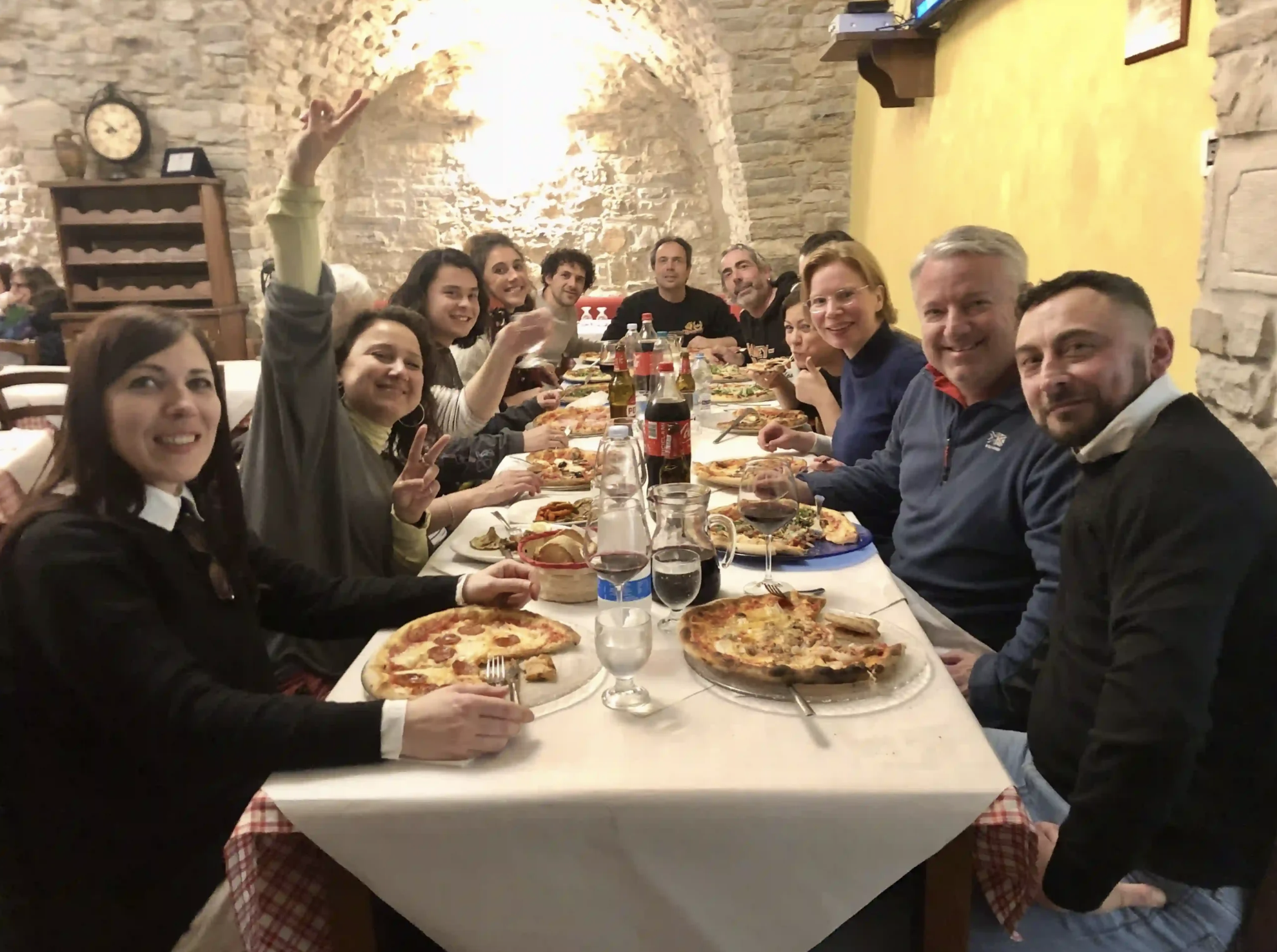
What Is La Vita Sukha?
La Vita Sukha is a conscious coliving community in Roseto Valfortore — a medieval mountain village in Puglia, Italy, officially recognised as one of the country's most beautiful. Founded by Liz Cirelli, an award-winning electronic music producer turned permaculture designer, it combines seasonal coliving with working regenerative agriculture and an explicit long-term vision: a permanent intentional community rooted in the land.
Unlike most colivings designed to optimise remote work, La Vita Sukha asks a different question. Not how to be more productive in a beautiful place, but how to live differently in one. It runs two seasons per year — spring and autumn — with a maximum of 14–15 residents per cohort and a minimum stay of two weeks.
It has been operating since 2023. It already has guests who have returned multiple times. That's rare this early, and it tells you something.
La Vita Sukha is best for: ✓ Remote workers questioning whether productivity optimisation is actually the goal ✓ Digital nomads ready to stay 2 weeks to 3 months in one meaningful place ✓ Anyone drawn to permaculture, regenerative farming, or intentional community ✓ People seeking genuine transformation, not amenities or networking ✓ Those who want authentic Italian village life — not the tourist version
Apply for a Season at La Vita Sukha → See all current room listings below 📧 hello@lavitasukha.com · 📱 +39 351 621 3813 📍 Roseto Valfortore, Puglia, Italy
Who Founded La Vita Sukha — and Why It Matters
Most coliving brands are created by property investors who spotted a market trend. La Vita Sukha is rooted in something categorically different.
Liz Cirelli was born in England to Italian parents who had emigrated from Puglia. She grew up between two cultures — spending part of each year in the very village where she now runs La Vita Sukha — and came from a long line of farmers who had traded the land for opportunity elsewhere. Before returning to Roseto Valfortore, she built a dramatically different life: internationally successful DJ, award-winning music producer, composer, and vocalist, alongside training as a yoga teacher, Reiki master, and eventually a qualified permaculture designer, following what she describes as a 10-year calling toward the discipline.
When her parents passed away and she inherited the family property, she chose not to sell, not to rent for passive income, but to build the intentional community she had long envisioned — one that honoured her parents' farming lineage. La Vita Sukha officially launched in November 2023, initially with co-founder Jarka Kunova, a psychology-informed business consultant who contributed operational expertise in the early stages. As of late 2024, Liz runs the project as sole founder.
This origin matters when reviewing La Vita Sukha because it explains everything distinctive about the experience. Liz lives on the property. She has tended the land for years. She has deep roots in the village and genuine relationships with its residents. She isn't optimising for occupancy. She's building the life she wants — and carefully inviting others into it.
Liz's Wider Vision: Rural Regeneration, Not Just a Coliving
This is the piece that separates La Vita Sukha from almost every other coliving covered on this blog, and it's worth stating plainly: La Vita Sukha is not primarily a business. It's the first phase of a stated, documented, multi-decade rural regeneration project.
Liz's own site is explicit about this framing: La Vita Sukha exists "as part of a longer-term vision for regenerative living, rural renewal, and renewed village life," and describes itself as "not only a villa in the hills," but part of "a longer-term vision for rural regeneration in Roseto Valfortore — one rooted in community, care for the land, meaningful local connection, and the reawakening of underused rural spaces and livelihoods."
Liz's project profile on the European Permaculture Network — where La Vita Sukha has been a listed member since June 2024 — lays out the ambition in more concrete terms. The stated plan includes developing eco-friendly structures on land designated for reforestation, enabling continued retreat hosting and permaculture education even as a permanent community forms in the main villa. Beyond Roseto Valfortore itself, the ultimate ambition documented on the profile is to establish "a global network of La Vita Sukha hubs" — and, notably, to sponsor individuals from disadvantaged backgrounds to experience community-based sustainable living, with grants intended to help them carry that learning into their own lives and communities.
La Vita Sukha is also a listed "Proud Partner of the Conscious Enterprises Network," a values-aligned business network, which situates the project within a wider ecosystem of purpose-driven ventures rather than positioning it as a standalone hospitality brand.
Roseto Valfortore itself has a genuine head start on this kind of regeneration. Independent reporting on the village describes it as an early and successful case study in Italian renewable-energy communities — a cooperative energy project (developed with the company Friendly Power) that, according to local officials quoted in coverage of the initiative, already produces roughly 100 times the energy the village needs to sustain itself. Roseto Valfortore was the first village this energy-community model was built in, ahead of similar projects the same company has since replicated elsewhere in Puglia, Basilicata, and Campania. Separately, Roseto Valfortore has also been identified in academic research on Italian rural repopulation as one of the municipalities that has undertaken specific incentive programmes to attract new residents and counter depopulation — the same demographic pattern (from roughly 5,400 residents mid-century to about 1,100 today) that shapes why villages like this need projects like La Vita Sukha in the first place.
In other words: La Vita Sukha isn't invoking "regeneration" as an abstract value statement layered onto a boutique villa. It's positioning itself inside a village that has already made real, documented moves toward energy self-sufficiency and repopulation — and Liz's stated ambition is for the coliving, the coming eco-structures, and eventually a permanent intentional community to become the human and cultural layer of that same regeneration story.
[TO CONFIRM] Liz would be the best source for how directly La Vita Sukha coordinates with Roseto Valfortore's municipal energy-community initiative or repopulation incentives, if at all — whether these are parallel, independent efforts happening in the same village, or whether there's active collaboration worth naming specifically.
The Location: Roseto Valfortore, Puglia's Mountain Heart
Roseto Valfortore sits in the Daunian Mountains in Puglia's Province of Foggia, near the border with Campania. This is not the Puglia of glossy travel magazines — no trulli, no whitewashed coastal towns, no architecture curated for Instagram.
Instead: a medieval hill town at 658 metres altitude, a population of roughly 1,100, narrow stone alleys, locals who greet strangers, weekly markets, and traditional festivals completely untouched by mass tourism. It's officially recognised as one of Italy's most beautiful villages — not because it's been polished, but because it's genuine.
Getting there:
Bari Airport: ~160 km, 2+ hours by car
Naples Airport: ~150 km, 2+ hours
Foggia: ~50 km — the nearest transit hub, reachable by train from most major cities, then taxi or bus to the village
Within and around the village:
Village centre: walking distance (three bars, four restaurants, per independent venue coverage)
Bar Italia (coffee, backup Wi-Fi, social hub): walking distance
Weekly Saturday market, small grocery stores, daily fresh produce vendors
Monte Cornacchia (Puglia's highest peak, 1,128m): reachable on foot
Vestruscelli forest (truffles, wild roses, Apennine wolves): nearby
Golden beaches of the Gargano Peninsula: ~80 km, a feasible day trip
The isolation advantage: You don't accidentally end up in Roseto Valfortore. The journey requires multiple connections and patience. This is intentional — and it works in La Vita Sukha's favour. As one reviewer put it: the fact that the location is rural "really works for it, because people staying here are doing so for the community, not the destination." The people who show up are the right people.
The Property: A Transformed Family Villa
Liz's parents spent over two decades building the property. She has spent the last several years transforming it into something that manages to be both a working permaculture farm and a genuinely comfortable place to live and work.
Capacity and accommodation:
5 bedrooms in the main villa (up to 20 beds), with singles, doubles, and twins available
Multiple room configurations: luxury private with en-suite, shared rooms
Sister villa 5 minutes away, adding an additional 5 bedrooms (up to 32 guests across both properties combined) for larger retreats and events
Spacious rooms with period furniture and Italian vintage character
Coworking and common spaces:
Multiple coworking areas throughout the villa
A private desk and chair in every bedroom for calls
A ~50m² communal living area with fireplace and panoramic views, doubling as an indoor yoga or meeting space
An open-plan kitchen and ~50m² indoor dining room, seating up to 70 for events and retreats
Recording studio (music production and podcasting) — an unusually specific amenity tied directly to Liz's own 20-year music career
Bar Italia in the village centre as backup coworking option (closed Mondays)
Outdoor facilities:
Large swimming pool
Pool table and ping pong
Terraces and balconies with mountain views
2 hectares of fenced grounds with fruit trees, a vegetable garden, and a private oak forest for meditation and reflection — plus stated plans to plant a perennial edible forest garden
Chicken coop and beehives
A recently built Temescal (Mexican sweat house)
Pricing & the Rooms on CoDNX
La Vita Sukha's own site quotes a progressive discount model for its Luxury Private Room (south-facing double, private en-suite, balcony, private annex desk): approximately €990 for a 2-week minimum stay (~€400/week), €1,450 for one month (~€320/week), down to roughly €255/week for a 3-month stay. Additional room types are available at lower price points, and all rates include utilities, Wi-Fi, weekly cleaning, garden produce, and laundry.
On CoDNX, five room listings are currently live, each showing a 10% Base Discount and a Long-term (28+ days) cancellation policy (full refund 30+ days before check-in, 50% refund 14–30 days before, no refund within 14 days):
Room | Bathroom | Starting Price |
Private Double Suite, Ensuite Private | ~$82/mo | |
Shared room (up to 2 guests), Ensuite Shared | ~$35/mo | |
Pending confirmation | Pending confirmation | |
Private Double Suite, Ensuite Private | ~$82/mo | |
Private Double Suite, Out-Suite Private | ~$64/mo |
[TO CONFIRM] Listings 1 and 4 currently show identical room type, bathroom configuration, and price — worth checking with Liz whether these represent two genuinely distinct rooms in the villa (there are, after all, 5 bedrooms in the main house) or a duplicate entry that should be consolidated. Listing 3 couldn't be independently verified and should be checked directly before publishing.
What's included across all room types, per the property's own site: private or shared accommodation, 24/7 coworking access and a desk in every room, high-speed fibre Wi-Fi (rural connectivity occasionally variable in some rooms), all utilities, unlimited fresh fruit and vegetables from the garden, weekly cleaning, laundry facilities, community events, yoga, meditation, sharing circles, permaculture garden sessions, and communal cooking.
Not included: groceries beyond garden produce, travel to Roseto Valfortore, and optional excursions.
A 20% deposit is required at booking; the remaining 80% is payable on arrival, with a 10% additional discount for cash payment in Mexico locations — note, this cash-discount detail is specific to Liz's other regional partnerships and should be confirmed as applicable (or not) at the Italy location specifically before including it as a guest-facing detail.
The Community: The Real Differentiator
If La Vita Sukha were simply accommodation with good Wi-Fi in a beautiful location, it would be a pleasant option. What fills its reviews with phrases like I fell in love with the lifestyle and it feels like a second home is something harder to manufacture than infrastructure: a community that forms naturally because the space is built to select for it.
The anti-programme approach: Unlike many colivings with rigid weekly schedules and managed social calendars, La Vita Sukha takes a deliberately organic approach. There is no daily programme. Coordination happens through a WhatsApp group, used lightly. This works because of scale — at 15 people, everyone knows everyone, and dinner isn't a networking event, it's dinner.
The Liz factor: Liz lives on the property and is consistently present — as anchor, facilitator, and the human reason this community coheres. Reviews cite her presence with unusual specificity: her energy, her permaculture knowledge, her genuine investment in every guest's experience.
The selection process: La Vita Sukha doesn't operate first-come, first-served. Prospective residents complete an application and have a conversation with Liz before being accepted — gatekeeping that is exactly what makes the community function.
What People Say
Guest reviews consistently describe extended stays and returns as the norm rather than the exception. One guest described booking for one month and staying for two, calling it their first coliving experience and describing meeting people they'll stay connected to for life. Another described falling in love with the villa and the lifestyle after a month, developing a close bond with Liz, and returning again shortly after. A guest reviewing on coliving.community in December 2025 described the place as having become their "second home," having returned repeatedly since first visiting in 2024.
Multiple guests specifically credit Liz's warmth as a host and the openness of Roseto's local community, and describe supporting the local economy directly by buying fresh produce from village farmers during their stay — a detail that ties the guest experience concretely back to the regeneration mission described above.
Honest negatives, stated plainly: some rooms have limited natural light, dorm-style or shared rooms can carry more noise, rural Wi-Fi has occasional variability, and the coworking situation depends on being comfortable at a dining table or nearby coworking space rather than a dedicated desk in every configuration — a nuance worth knowing if a private, always-available workspace is a priority.
Pros & Cons
Pros
Founder-lived authenticity — Liz isn't an absentee owner; she's there daily, growing food and facilitating community.
Genuine permaculture integration, backed by real credentials (Liz is a qualified permaculture designer) and real infrastructure (2 hectares, oak forest, garden, beehives, chickens).
Intentionally tiny — 15 residents maximum, so real community forms because of the scale, not despite it.
Deep village roots, in a village that has independently made real progress on energy self-sufficiency and repopulation — La Vita Sukha isn't manufacturing a regeneration narrative in a vacuum.
A documented, ambitious long-term vision (global hub network, sponsorships for disadvantaged individuals) that goes well beyond a typical coliving's mission statement.
Genuinely transformative guest outcomes — extended stays and repeat visits are common enough to be worth noting plainly.
Affordable for what it is, especially at the CoDNX shared-room rate (~$35/mo) relative to the ensuite options (~$64–82/mo).
Cons
Not suited to short stays — the minimum is two weeks, and real value only emerges over a month.
Remote location — getting to Roseto Valfortore requires multiple connections and rules out spontaneous visits.
Rural Wi-Fi limitations — generally reliable, but occasional connectivity issues are noted by guests.
No rigid daily schedule — guests who need external structure or accountability may find the flexibility feels like a void.
No nightlife or urban access — the nearest larger town is a real distance away.
Founder-dependent — the experience is inseparable from Liz, which is both the project's greatest strength and a structural consideration for long-term scalability, especially given the stated ambition to eventually franchise the model into a "global network of hubs."
[TO CONFIRM]
Two CoDNX listings currently appear identical and one listing's details couldn't be verified — worth cleaning up before guests browse the full set.
How La Vita Sukha Compares to Other European Colivings
Factor | La Vita Sukha | ESCAPE Coliving | Selina | Outsite |
Community depth | Deep — 10–15, curated | Deep — 15–30, curated | Mixed — large, transient | Moderate — varies |
Scale | Tiny & intentional (15 max) | Small (15–30) | Large (50–200+) | Small–medium |
Nature access | Mountains, forest, farmland | Alps & Mediterranean | City-focused | Varies |
Sustainability focus | Core philosophy, documented regeneration plan | Partial | Marketing-level | Minimal |
Founder-lived | Yes — Liz on-site daily | Yes — Haz & Fanny | VC-backed chain | Partially |
Minimum stay | 2 weeks (1 month recommended) | 7 days (1 month recommended) | 1 night | 7 days typical |
Best for | Regeneration + conscious community | Nature + deep community | City social scene | Remote work infrastructure |
La Vita Sukha's real competition isn't Selina or Outsite — it's the small group of founder-operated, values-driven colivings in rural Europe equally specific about who they're for. In this category, its permaculture integration, documented rural-regeneration ambitions, and village roots give it a genuine edge over spaces that use sustainability as a marketing term rather than a lived, cited practice.
Apply for a Season at La Vita Sukha → See all current room listings above
FAQ
What is La Vita Sukha? A founder-operated conscious coliving community in Roseto Valfortore, a village in the Daunian Mountains of Puglia, Italy. Founded by Liz Cirelli, it combines seasonal coliving with permaculture farming and a documented, long-term rural regeneration vision. It runs spring and autumn seasons, with a maximum of 14–15 residents per cohort.
How much does La Vita Sukha cost? Per the property's own site, the Luxury Private Room runs approximately €990 for two weeks, €1,450 for one month, down to roughly €255/week for a three-month stay. On CoDNX, current listings range from roughly $35/month (shared room) to $82/month (private ensuite) before discounts, with a 10% Base Discount currently applied.
What is the minimum stay? Two weeks, with one month strongly recommended for genuine value from the community.
Is La Vita Sukha part of something bigger than one villa? Yes — Liz's stated long-term vision, documented on her European Permaculture Network profile, includes developing eco-structures for reforested land, and eventually building a global network of La Vita Sukha hubs, including sponsorships for individuals from disadvantaged backgrounds to experience community-based sustainable living.
Is Roseto Valfortore doing anything else notable around sustainability? Yes — independent reporting describes the village as an early Italian case study in cooperative renewable energy communities, producing far more energy than it needs, and it has separately been identified in academic research as a municipality actively working to counter rural depopulation.
Is La Vita Sukha good for digital nomads? Yes, with a qualification — it's best suited to those open to questioning whether productivity optimisation is actually what they're after. The coworking infrastructure is functional but not uniformly a dedicated desk in every configuration; confirm your specific room's workspace setup before booking if that matters to you.
How do I book? Through the CoDNX room listings linked throughout this review, or directly via hello@lavitasukha.comor +39 351 621 3813.
Final Verdict: Is La Vita Sukha Worth It?
La Vita Sukha is one of the best coliving options in Europe for a specific kind of person — and it is deliberately not for everyone, which is the most honest thing you can say about any coliving worth recommending.
If you value nature, community, permaculture, and authentic experience over urban convenience and constant stimulus — and you can commit to at least a month — La Vita Sukha delivers at a level most colivings with larger marketing budgets simply cannot match. What sets it apart from comparable projects, once you look past the villa itself, is how seriously and specifically documented Liz's wider ambition is: a real permaculture credential, a real project profile with a stated global-hub vision and a disadvantaged-sponsorship plan, and a village that has already made genuine, independently reported progress on energy self-sufficiency and repopulation. This isn't a coliving borrowing regeneration language — it's a coliving embedded inside an actual regeneration story.
The intentional-community vision is still unfolding. Some infrastructure is still developing. Liz is still building. But that's part of what makes this moment interesting to arrive at. You're not visiting a finished product — you're participating in something being made.
For the right person, La Vita Sukha isn't a coliving. It's a turning point.
Apply for a Season at La Vita Sukha → See all current room listings above 📧 hello@lavitasukha.com · 📱 +39 351 621 3813 📍 Via Ariella 17, Roseto Valfortore, Puglia, Italy
Last updated: [set on publish] | Based on firsthand research of lavitasukha.com, Liz Cirelli's European Permaculture Network project profile, independent reporting on Roseto Valfortore's renewable energy community (CleanTechnica) and rural repopulation efforts (academic literature on Italian borghi regeneration), guest reviews from coliving.community and other platforms, and current CoDNX listing data. See [TO CONFIRM] tags for details worth verifying directly with Liz before publishing.