The NeuroBreath Method Workshop: A Practical Review of Craig Dewar's Breathwork & Somatic Experience
What actually happens when you lie down, close your eyes, and let your breath do the work — an honest look at Craig Dewar's NeuroBreath live sessions, based on verified participant feedback.
What Is NeuroBreath — and Why Does a Live Workshop Even Exist?
The NeuroBreath Method is, at its core, a structured nervous system regulation protocol created by Craig Dewar. The method combines four elements — breathwork, tapping, acupressure, and (in the more intensive format) lymphatic drainage — into a sequenced practice designed to shift the body out of chronic stress and back toward parasympathetic regulation.
On paper, this is something you can do on your own. The method is available as a free 7-minute Quick Reset, a 16-minute guided Reset Protocol, a downloadable eBook, and a full 60-minute NeuroBreath Intensive. All of it is accessible online, on your own schedule.
So the natural question is: what does showing up in person — or to a live group session — actually add?
That question is what this review is really about. Using verified feedback from participants who attended NeuroBreath workshops hosted through CoDnx, we'll walk through what the live experience looks like, what participants consistently report, and what you should know before deciding if this format is right for you.
The Format: What Happens in a NeuroBreath Workshop Session
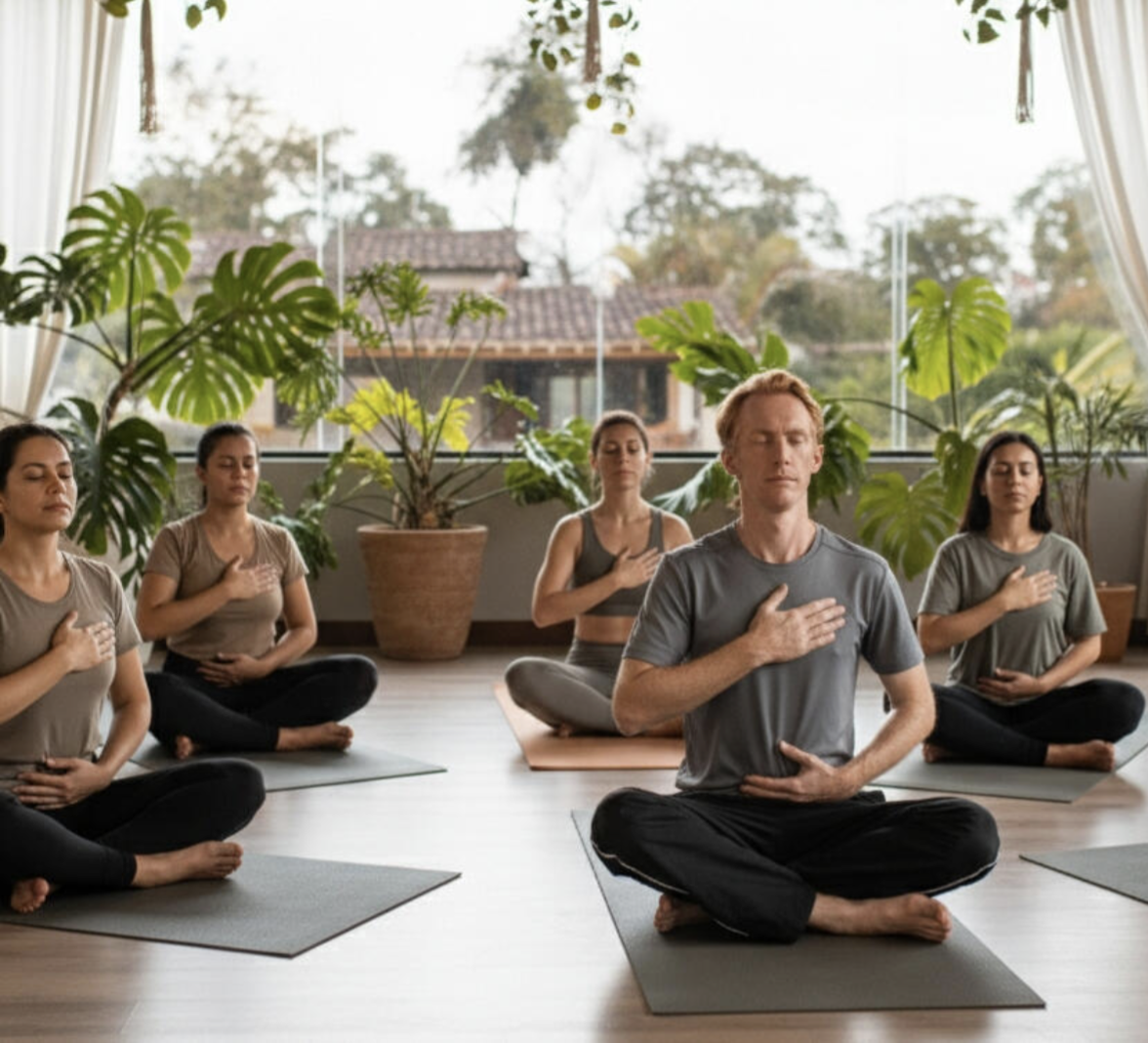
Based on participant accounts, a live NeuroBreath workshop follows a clear arc:
You arrive and get set up on a mat. Sessions take place lying down on comfortable mats, which immediately distinguishes this from a sitting breathwork class or a standing movement practice. The horizontal position matters: it allows the body to release postural holding patterns and reduces the mental effort of "staying upright," which can otherwise compete with the internal focus the practice requires.
Craig guides you through shifting breathing rhythms, live. The breath patterns move — from slower, more controlled breathing into more active phases — while music plays throughout. This isn't a silent meditation. The musical score is part of the design, providing pacing cues and an ambient emotional texture that several participants specifically called out as contributing to the overall effect.
Eyes are closed throughout. This is standard in deep breathwork facilitation, and it serves a specific function: with eyes closed, the brain's threat-detection circuitry (which is heavily vision-dependent) gets a partial rest, making it easier for the nervous system to move into regulation rather than staying in scan mode.
The session creates space for somatic and perceptual experience. Multiple participants described sensations that are well-documented in the breathwork literature — surges of physical energy, visual phenomena (patterns, symbolic imagery, light), and a sense of physical release or emotional lightness. One participant described seeing vivid figures and a symbolic eye with eyes closed; another described an "amazing surge of energy and physical freedom" that left them productively awake and energised well into the night after the session.
Integration follows the active breathing phase. The pacing of a well-run breathwork session includes an integration window — a quieter period where the body processes what happened before participants return to ordinary waking state. Craig's sessions, based on participant feedback, include this structure.
The Facilitator: Craig Dewar
The NeuroBreath Method is Craig Dewar's creation, and the live workshops are where that authorship becomes most visible. Knowing the method well enough to teach it and knowing a room well enough to guide people through a vulnerable physiological experience are different skills — and several participants specifically named Craig's facilitation quality as central to the experience, not incidental to it.
One long-term participant (returning for a second session) said simply: Craig is excellent at what he does. Another, reflecting on five years of nomadic participation in wellness practices across multiple countries, singled out NeuroBreath as the best breathwork and community experience they'd found — attributing much of that to Craig's evident personal investment in each person's experience.
This is worth noting not as flattery but as practical information: the quality of a somatic or breathwork session is highly facilitator-dependent. The method provides the structure; the facilitator provides the safety, the attunement, and the moment-to-moment calibration that makes the difference between a session that lands and one that doesn't. Based on the evidence available, Craig's sessions land.
Who Attends — and What They Come In Expecting
The participant pool represented in these reviews is meaningfully diverse, and worth looking at directly:
First-time participants
(multiple reviewers) — people who had never done breathwork or somatic practice before, coming in with curiosity and some degree of not-knowing. Both first-timers whose reviews are included had uniformly positive experiences, which is notable: first-session breathwork can occasionally be disorienting or uncomfortable if not well-facilitated, and the fact that complete newcomers are rating every dimension at 5.0 is a signal about how well Craig manages the onboarding experience.
Occasional participants
— people who have some exposure to similar practices but don't have a regular practice. These reviewers are calibrating against prior experiences and still finding the NeuroBreath format excellent.
Return participants
— at least one reviewer attended a second session and came back because the first one worked. That's a simple but meaningful signal: voluntary return, from someone who had already had the experience and knew what to expect.
The geographic and linguistic range is also worth noting: reviews are in Spanish and English, with participants from Latin America and Europe. The workshop appears to attract both local and international participants — consistent with the broader CoDnx / nomad coliving community context in which Craig hosts these sessions.
What Participants Report: Breaking Down the Feedback
All four verified reviews give 5.0 ratings across every dimension — Workshop, Breathwork/Somatic Embodiment, Arrangements (guided session, Wim Hof, etc.), and Schedule & Pacing. That unanimity warrants some scrutiny: it could reflect selection bias in which reviews are presented, or it could reflect a genuinely consistent experience. With that caveat stated, here's what participants describe in their own words.
Nervous system regulation as the core outcome. Multiple participants describe a felt shift in their baseline state — reduced anxiety, better stress regulation, or a sense of reconnection with themselves and their environment. One participant specifically frames the experience in terms of learning to regulate the nervous system during moments of daily anxiety and stress, and describes reconnecting with her surroundings after the session. This language maps directly onto what the NeuroBreath Method claims to do mechanically: activate the parasympathetic nervous system and move the body out of a stress-dominant state.
Post-session energy, not depletion. Several breathwork formats leave participants in a deeply restful, sometimes sleepy state post-session. What's notable here is that at least one participant reports the opposite: increased productivity, motivation, and energy that persisted until the early hours of the following morning — including tackling tasks that had been postponed. This is consistent with certain breathwork protocols where the combination of carbon dioxide/oxygen recalibration and physiological release produces a state of heightened alertness and reduced mental friction, rather than sedation. It's useful to know which category NeuroBreath sessions tend to produce.
Sleep quality. At least one return participant (attending her second session) specifically mentions sleeping deeply afterward — which sits alongside the productivity report above without contradicting it. These outcomes are not mutually exclusive: the nervous system re-regulation that breathwork facilitates can produce either outcome depending on when the session occurs, the individual, and the specific protocol used.
Sensory and perceptual experience. One participant provides a detailed account of the internal experience: lying on a comfortable mat, following Craig's shifting breath rhythm cues, music playing, and then — with eyes closed — experiencing vivid visual phenomena (figures, a symbolic eye) alongside a surge of physical energy and a sense of freedom in the body. This description is consistent with what happens in deep breathwork when hyperventilation-adjacent breathing patterns temporarily shift blood CO₂ levels, producing altered perceptual states. These are not side effects; they're part of what the practice does, and they're worth knowing about in advance if you're a first-timer.
Accessibility for first-timers. The word that appears in first-time reviewer feedback is "comfortable" — comfortable environment, comfortable pacing, comfortable experience for someone new. This is a deliberate facilitation quality, not an accident. First-time breathwork participants need to feel safe to surrender to the physical experience; if they don't, the session produces anxiety rather than regulation.
What the Method Is Actually Doing (The Physiology, Briefly)
For the sceptical or the curious: the physiological basis of breathwork as a nervous system regulation tool is well-established, even if the more experiential or spiritual framing that sometimes surrounds it isn't for everyone.
The NeuroBreath Method operates on a few key mechanisms:
Breathing pattern and CO₂/O₂ balance. Slow, controlled breathing activates the parasympathetic nervous system (the "rest and digest" branch) by directly influencing the vagus nerve through the diaphragm. More active breathing phases shift CO₂ levels in ways that alter cerebral blood flow and produce the altered perceptual states that experienced breathwork practitioners describe.
Tapping. Rhythmic tapping at specific points (related to acupressure meridian locations, though also studied in the context of EFT — Emotional Freedom Technique) has been found in multiple studies to reduce cortisol levels and self-reported anxiety, with proposed mechanisms involving direct stimulation of amygdala calming pathways.
Acupressure. Manual pressure at specific points, well within the practitioner evidence base for stress reduction and nervous system calming, though the body of rigorous research is still developing.
Lymphatic drainage (Intensive only). The extended Intensive format adds structured lymphatic stimulation, which supports immune function and the physical processing of stored tension and metabolic waste.
None of this requires belief in anything outside normal physiology. It's a sequenced use of tools that all have some evidence base, combined in a specific order designed to produce cumulative effect.
Honest Caveats
All reviews are 5.0. As noted above: this is worth holding lightly. Four five-star reviews from a curated platform do not constitute a comprehensive picture of every participant's experience. Breathwork sessions can occasionally produce discomfort, strong emotional releases, or disorientation — particularly in participants with certain trauma histories or medical conditions — and there's no representation of those experiences in this review set.
Individual variation is real. The experiences described — from deep sleep to hours of productive energy — suggest that outcomes vary meaningfully between individuals. Your experience will depend on your nervous system's baseline state, your experience with somatic practices, what you bring to the session that day, and factors that no facilitator fully controls.
This is not a substitute for medical or psychological treatment. The NeuroBreath Method is a wellness and self-regulation practice, not a clinical intervention. If you're managing diagnosed anxiety, PTSD, or other conditions, it's worth discussing breathwork with your mental health provider before attending.
The CoDnx context. These sessions are hosted through CoDnx, a community platform likely operating in a coliving or nomad community context (given the apparent participant demographics). That context — groups of people in a relatively open, wellness-oriented setting — may shape the experience in ways that differ from a standalone clinic booking.
The Programs: What Craig Offers Beyond Live Workshops
The live workshop is one format. The NeuroBreath ecosystem also includes:
Format | Duration | What It Is |
Quick Reset | 7 minutes | Free guided session; intro to the method |
NeuroBreath Guide eBook | Self-paced | Full method explanation, step-by-step sequence |
Reset Protocol | 16 minutes | Fully guided session, complete sequence |
NeuroBreath Intensive | 60 minutes | Deep experience with lymphatic drainage added |
Complete Collection | All of above | All programs + bonus, bundled |
The free Quick Reset at neurobreathmethod.com is a sensible first step if you want to experience the basic logic of the method before attending a live session. The live sessions add the facilitation layer — Craig's live guidance, the group energy, the dedicated space — that a self-directed recording can't replicate.
Who Should Attend a NeuroBreath Workshop
A strong fit if you:
Are curious about breathwork but have never tried it — the facilitation quality appears specifically good for first-timers
Have tried breathwork before and want a structured, music-supported, somatic version
Are in a nomad community or coliving context and want a wellness practice that fits an active lifestyle
Experience chronic stress, low-grade anxiety, or mental fatigue that you'd like a practical tool for managing
Want to experience the difference between self-directed breathwork and live-facilitated breathwork
Worth pausing on if you:
Have a history of trauma or dissociation — deep breathwork should be discussed with a clinician first
Have cardiovascular conditions or respiratory issues — same advice applies
Are looking for purely clinical evidence-based intervention rather than a wellness practice
Strongly prefer solo, silent practice environments over group-facilitated experiences
Final Verdict
The NeuroBreath Method workshops that Craig Dewar facilitates through CoDnx are doing what they claim to do — and doing it well enough that first-time participants are comfortable, repeat participants return voluntarily, and multiple people across different cultural and linguistic backgrounds are describing meaningful, felt shifts in their nervous system state.
That's not nothing. In a wellness landscape crowded with overpromising, Craig's approach is notably practical: a method built on real physiological mechanisms, facilitated with clear attention to pacing and participant safety, accessible to beginners and experienced practitioners alike.
The live workshop format adds something the digital programs can't: real-time facilitation, the regulatory effect of shared space and group energy, and a facilitator who adjusts to the room rather than playing a pre-recorded track. Whether that's worth the format to you depends on where you are and what you're looking for — but based on the available evidence, it's a legitimate, well-run experience from someone who clearly knows the territory.
Website: neurobreathmethod.com Free 7-minute Quick Reset: Access it here Instagram: @neurobreath_method
Reviews cited in this post are verified participant feedback from CoDnx workshop sessions hosted by Craig Dewar, collected between April and May 2026. All ratings and quotes are presented as submitted by participants and have not been independently audited beyond the platform's own verification process.