
Posada de la Luz Review (2026): Spain's Most Soulful Rural Coliving
Honest Posada de la Luz review (2026). A restored village house in the highlands of Aragón, halfway between Madrid and Barcelona, run as a conscious rural coliving and artistic residency. Seven named rooms, a shared garden with an ancient fig tree, a cave, a rooftop terrace, an exhibition gallery, a shared workshop, and two resident cats. Stays of two weeks to twelve months. From €20 per day. For those who need to pause, create, or reinvent.
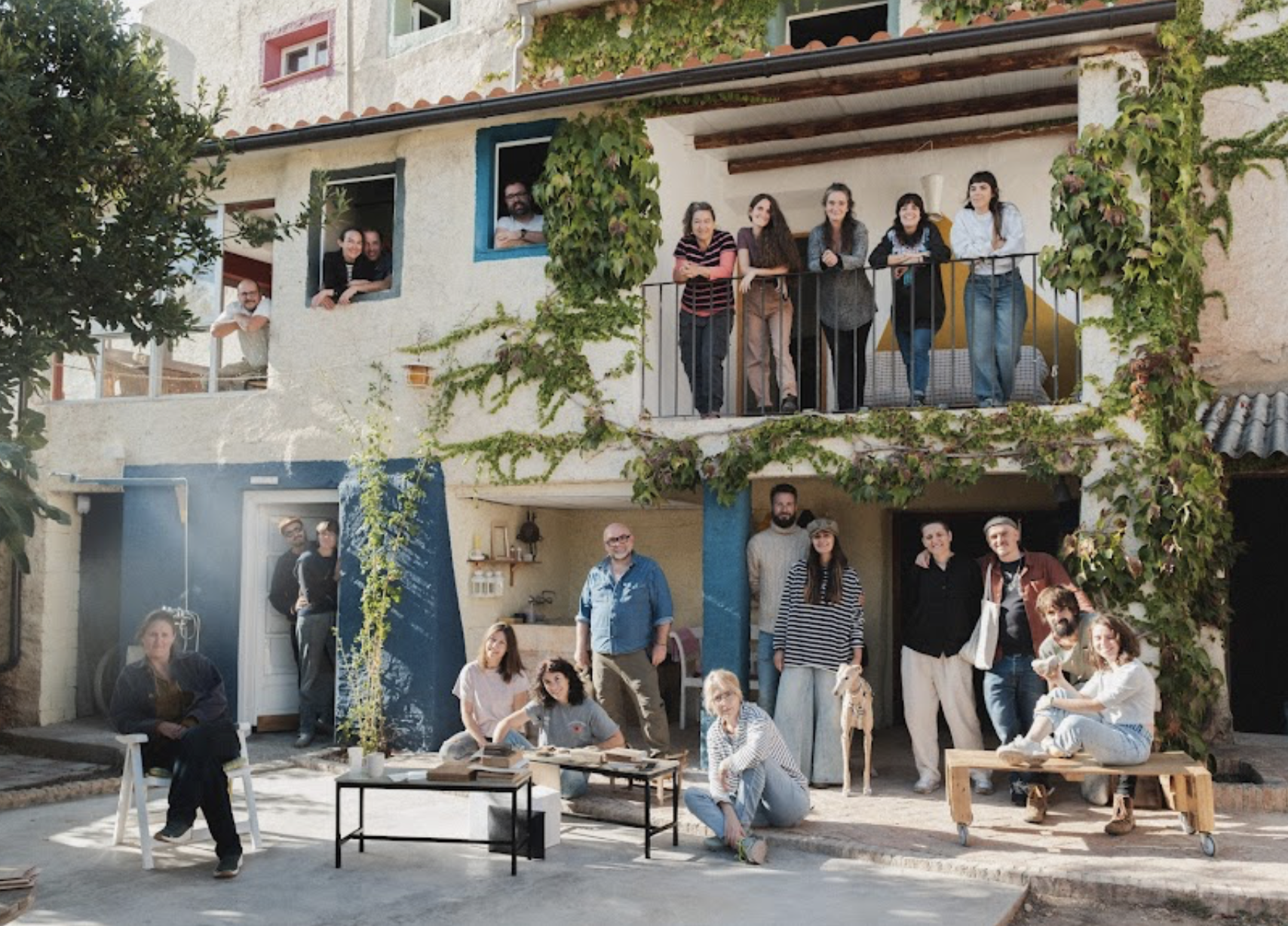
What Is Posada de la Luz?
There is a category of place that resists algorithm. Posada de la Luz — a lovingly restored posada on Calle Juan Carlos I in the village of Torralba de Ribota, Zaragoza, run as a rural coliving and artistic residency in the highlands of Aragón — belongs emphatically in that category. It is not the most polished coliving in Spain. It is not the most conveniently located. And yet, among the remote workers, artists, writers, and travellers who have found their way here, it consistently earns the kind of praise reserved for places that genuinely change something: it felt too short, perfect for developing our project, the kitchen is a fantastic meeting place for hours of conversation.
Located in a village of a few hundred souls on the route between Madrid and Barcelona, 90 km from Zaragoza and reachable in one hour by AVE high-speed train to Calatayud, Posada de la Luz is a rural coliving with a clear and unusual proposition: a house built for people who need to slow down, think deeply, and live alongside others who are doing the same. Stays run from 15 days to 12 months. The philosophy is conscious cohabitation rooted in a common good economy, cooperation, and the idea that beauty lies not in things, but in the way we look at them.
It is, without question, one of the most distinctive coliving experiences in Spain. This review explains what it actually offers — and who will find it irreplaceable.
Posada de la Luz is best for:
✓ Remote workers, writers, artists, and researchers who need silence and depth, not speed ✓ People at a crossroads — a creative project, a burnout, a reinvention — who need time and space ✓ Anyone drawn to Aragón's extraordinary highland landscape: rolling meseta, medieval villages, ancient paths ✓ Creatives who value living inside a real artistic project, not just near one ✓ Travellers who want a house, not a hotel — with their own keys, their own rhythms, and genuine community ✓ Digital nomads seeking the most affordable conscious coliving in mainland Spain (from €20/day)
Contact the Posada → 📧 hola@posadadelaluz.com 📍 C/ Juan Carlos I, 4, 50311 Torralba de Ribota, Zaragoza (Aragón, Spain)
What Makes Posada de la Luz Different
Most colivings compete on amenities, location, or community programming. Posada de la Luz competes on something harder to describe and rarer to find: atmosphere. The atmosphere of a house that has been thought about with genuine care — not as a product to be optimised, but as a living space to be inhabited.
The Posada is part of a broader cultural project. It operates alongside El Granero, the neighbouring home and artistic studio of photographer Juanan Requena, whose exhibitions have been shown within the Posada's own gallery space. The Posada's rooms are named after female photographers — Vivian Maier, Diane Arbus, Rinko Kawauchi, Nan Goldin, Francesca Woodman — not as decoration but as a statement of intent: this is a house that values the act of looking slowly, of finding significance in the overlooked, of making art from the texture of daily life.
The philosophy is explicit. Posada de la Luz was born from a desire to reconcile the human with the natural. It believes in a common good economy, in cooperation and authenticity. It describes its kitchen, garden, workshop, terrace, and breakfast table as temples of dialogue and mutual care. This language could be marketing; in practice, according to the people who have stayed here, it is simply how the place feels.
The minimum stay of 15 days is not bureaucratic — it is a design decision. The Posada is not designed for short stays or fast tourism. It is designed for the kind of time that allows something to actually happen.
The Location: Torralba de Ribota and the Aragón Highlands
Torralba de Ribota is a village on the N-234 road in the Comunidad de Aragón, in the province of Zaragoza. It is not, by any conventional metric, a destination. There is no tourist infrastructure, no nightlife, no Airbnb cluster. There is a medieval church (the Colegiata de San Miguel, a Gothic structure on the UNESCO tentative list), surrounding fields, vast sky, silence, and the kind of undisturbed rural rhythm that has become genuinely rare in Europe.
This is the point.
The Posada is 90 km from Zaragoza (around 1 hour by car or bus), 80 km from Soria, and reachable by AVE train in 1 hour from Madrid or 2 hours from Barcelona — alighting at Calatayud, just 12 km away, the nearest town with full services. This is not isolation for its own sake: it is proximity to two of Spain's great cities without the noise that makes those cities exhausting.
The surrounding landscape rewards walking, cycling, and genuine exploration without crowds. The ancient Camino de la Vera Cruz connects the area to Murcia. The Moncayo massif lies nearby. Medieval villages — Calatayud itself, Daroca, Alhama de Aragón — are within easy reach.
For a digital nomad or creative resident who needs to be genuinely disconnected from urban noise, the location is a feature. For someone who cannot function without a city within walking distance, it is a genuine constraint — one the Posada is transparent about.
Distance from Posada | Destination |
12 km | Calatayud (nearest town, full services, EV charging) |
80 km | Soria |
90 km | Zaragoza |
~1 hr by AVE | Madrid (from Calatayud) |
~2 hrs by AVE | Barcelona (from Calatayud) |
Getting there by car is easy via the A2 motorway. By train, the AVE to Calatayud and then a bus or taxi covers the final 12 km. There is a daily local bus service between Calatayud and Torralba de Ribota.
The Space: A House With Every Conceivable Corner
The Posada occupies a restored village house on the main street of Torralba de Ribota, connected through a shared garden to El Granero next door. The space has been furnished and equipped with a density of care that the owners describe with characteristic self-awareness — and then list, joyfully, at considerable length.
What the inventory reveals is a house that has been thought about for extended stays rather than brief visits. Everything needed for real domestic life is here: proper kitchen with a large fridge and full cooking equipment; an osmosis water filter; ceiling fans with remote controls; radiators in every room and corner connected to a powerful boiler; a library; a fireplace in the kitchen; a barbecue in the garden; laundry facilities; two vacuums; a projector; a Bluetooth-enabled sound system; and a selection of vintage crockery, some of it over fifty years old and, as the Posada notes, still going strong.
Working Spaces
The Posada is emphatic about one thing: there are many, many places to work. The variety is one of its most genuinely unusual characteristics.
The communal sala has a large Provençal work table and soft, diffused light from the library corner. The kitchen island offers a more dynamic surface for ideas requiring movement. The glassed-in gallery of the kitchen faces the village landscape. The salon has sofas, a rocking chair, and a sound system. The garden has shaded spots, hammocks, a fig tree, and round tables in the sun. The rooftop terrace offers views across the Aragonese countryside. And there is a cave — an underground space the Posada describes as offering zero phone signal, perfect solitude, and the purest silence of being beneath the earth.
This variety is not incidental. For anyone whose creative or professional work requires different states — focused production, lighter thinking, conversation, complete disconnection — having multiple genuinely different environments within the same building is a meaningful operational advantage.
Communal Amenities
Large shared kitchen with full cooking equipment, oven, and two moka pots
Osmosis-filtered water supply
Common sala / work area with library
Glassed gallery (the
galería
)
Living room with sofas, sound system, and projector
Garden with fig tree, laurel, hammocks, barbecue, long table, and rocking chair
Rooftop terrace (the
azotea
)
Underground cave for silent immersion
Exhibition gallery / multidisciplinary salon (also available for events)
Shared workshop space (the
taller
)
Shared bicycle parking; two bicycles available for guests
Laundry facilities and outdoor drying areas
Four shared bathrooms with gel and shampoo provided
Very fast Wi-Fi with a password described by the Posada as "unforgettable and full of meaning"
Smoke detectors and first-aid kit
Two resident cats in the garden
The Rooms: Named After How We See
The rooms at Posada de la Luz are named not after places or objects but after photographers — specifically after female photographers whose work embodies a particular way of seeing the world. Each room carries the sensibility of its namesake into its design, its objects, its light.
All rooms share certain fundamentals: a 150×200 cm double bed (for one or two people — adults only), desk, chair, and lamp for work, wardrobe or open clothes storage, ceiling fan with remote, radiator heating, soundproofed windows, and views of the village. Pets are not permitted. Smoking is not permitted inside.
La Vivian — Inspired by Vivian Maier. The room of introspection and secret calm. 18 m². Views of the village. First floor. €25/day (1 person).
La Arbus — Inspired by Diane Arbus. The room of looking without judgement. 15 m². An antique mirror, a discreet window. First floor. €22/day (1 person).
La Rinko — Inspired by Rinko Kawauchi. Clarity, soft colours, light curtains, gratitude. 15 m². Two windows. First floor. €25/day (1 person).
La Goldin — Inspired by Nan Goldin. Warm energy, a balcony overlooking the street, vitality without masks. 12 m². Second floor. €20/day (1 person).
La Woodman — Inspired by Francesca Woodman. The most intimate room; an inner window, translucent curtain, dried flowers, a photograph in black and white. €20/day (1 person).
There are also two further rooms (details available on the reservations page), plus El Molino — an independent apartment / loft with its own kitchen, large bathroom, living room, and 60 m² of private space on the ground floor, accessed from the street independently. El Molino includes full access to all communal areas and the garden. From €30/day.
Pricing structure for all rooms:
Second person in a double room: 50% reduction per day
Stays over 30 days: 10% discount
Minimum stay: 15 days
Maximum stay: 12 months
Pricing: Among the Most Affordable Conscious Colivings in Spain
The pricing at Posada de la Luz is remarkable in context. At €20–25 per day for a private room (from €600–750 per month for individual stays), it represents an extraordinary value proposition relative to the quality of the house, the depth of the creative environment, and the cost of comparable rural retreats in Spain.
What is not included is equally worth noting: meals are not provided or included. Basic food staples are available in the kitchen, but residents stock their own supplies. This is by design — shared cooking and eating together is part of the community model, not a service to be provided.
The nearest supermarkets are in Calatayud (12 km), which reinforces the reality that this coliving requires a car or planning for provisions. The Posada's website is transparent about this, describing it as something to factor into your packing and logistics.
The economic model is explicitly described as a common good economy. The tariff covers responsible use of the space, maintenance of a well-kept house, and inhabiting a carefully curated environment. It is not designed to maximise occupancy but to sustain a project with depth.
The Project: Coliving, Residency, and Cultural Space
Posada de la Luz is not simply a coliving. It is, as its own structural documentation makes clear, a living cultural project.
The multidisciplinary exhibition salon is a genuine gallery space that has hosted photography exhibitions, including work by Juanan Requena (whose perenne entropía was shown in what is now El Molino). The space is available for presentations, tastings, book launches, team meetings, creative workshops, rehearsals, film screenings, and cultural events — described by the Posada as any event requiring a refuge with soul.
The taller (workshop) is a shared creative working space for guests engaged in hands-on projects.
The property has also been used as a film location, with its architecture and atmosphere lending themselves to audiovisual projects. This dimension is actively encouraged within limits that preserve the domestic character of the house.
The residency model — stays of weeks to months — is equally important. Writers, photographers, researchers, filmmakers, and creative professionals are explicitly welcomed as residents. The 15-day minimum is in place because the Posada has found that shorter stays don't allow real adaptation, real concentration, or real creation to take hold. This is the house's theory of time, and it shapes everything.
The Posada also has its own AI assistant in ChatGPT — an unusual but entirely coherent choice for a project that takes personalised guidance seriously. Prospective guests can use it before booking to understand whether the rhythm of the house matches their needs.
Community and Philosophy
The Posada's description of community is notably non-programmatic. There are no mandatory events, no structured networking sessions, no curated mixers. What there is instead is the kitchen, the garden, the shared fire, the breakfast table — and the natural accumulation of connection that happens when a small number of thoughtful people share a well-designed space over a meaningful period of time.
The Posada's philosophy holds that community cannot be manufactured; it can only be invited. The design of the house does the inviting. The people do the rest.
Residents bring their own rhythms. Some work in focused solitude. Some cook and eat together. Some organise informal talks or creative exchanges. Some simply read in the hammock under the fig tree while a cat investigates their legs. The Posada neither dictates nor programmes this — it simply provides conditions in which it can happen.
What the Posada asks of residents is simple: respect, cleanliness, and a shared harmony. There are no rigid rules, only a clear intention that each stay be a human and luminous experience.
What People Say
The reviews for Posada de la Luz are consistent and specific in what they praise:
"We love being able to stay at La Posada when we're on the road and need a break. The peace and quiet of the surroundings is perfect for recharging. It's a charming village house with many nooks and crannies, lovingly renovated, evident in the details you discover around every corner. The kitchen is a fantastic meeting place for sharing hours of conversation in a collaborative atmosphere." — Verified review, coliving.community
"Visiting Posada de la Luz in its first few days open was unforgettable; it felt too short. Learning about the work they do and their small art gallery with photography is truly a reason to visit this town and get to know this place." — Verified review, coliving.community
"We spent a few days at the inn and it was wonderful; it was perfect for developing our project, and the staff were very friendly." — Verified review, coliving.community
Consistent themes: the quality of the renovation and its attention to detail; the atmosphere of genuine peace; the kitchen as the social heart of the house; the gallery and artistic dimension as a distinguishing feature; and the welcome, which is described repeatedly as warm, present, and human.
Pros & Cons
Pros
Extraordinary value for the experience offered. At €20–25 per day, Posada de la Luz is among the most affordable conscious colivings in Spain by a significant margin. The quality of the renovation, the depth of the creative environment, and the level of care put into the house are not reflected in the price in the way that similar projects might charge for them.
A house designed for depth, not throughput. The 15-day minimum, the multiple working environments, the library, the cave, the gallery, the workshop — every element of the Posada's architecture points toward real creative work and real rest, not the performance of productivity. This is rare.
The artistic dimension is real and embedded. The rooms named after photographers, the adjacent studio of Juanan Requena, the exhibition gallery, the history of cultural events hosted here — this is not a coliving that uses art as decoration. Art is structural to what the Posada is.
Excellent rail connectivity despite rural location. One hour from Madrid by AVE, two hours from Barcelona. The isolation is genuine without being absolute. This is the sweet spot for people who need distance from the city without losing access to it.
The Molino apartment offers genuine independence. For guests who want full privacy with community access available when desired, a 60 m² ground-floor loft with its own entrance and kitchen is an unusual and valuable option.
A living project, not a static product. The Posada's founders are present neighbours, not absentee managers. They describe themselves as "medium nomads" but are consistently available to welcome, explain, and support. The level of personal investment in each guest's experience comes through in every detail of how the house is described and maintained.
Cons
Requires a car for provisions. The nearest supermarkets are 12 km away in Calatayud. There is a daily bus, but independent mobility is essential for comfortable long-term stays. This is not a constraint the Posada hides — it is stated clearly — but it is a meaningful practical consideration.
No meals provided. Residents stock and prepare their own food. For some, cooking together in the shared kitchen is part of the appeal. For others who prefer meals to be handled, this may be a friction point.
Limited phone and EV charging infrastructure in the village. Electric vehicle charging requires a trip to Calatayud. Some areas of the property deliberately have no signal. These are by-design features of a rural location, but worth factoring in.
The village is not a hub for nightlife or dining out. Torralba de Ribota has no restaurants or bars in the tourist sense. Everything social happens inside the Posada or requires a drive. For guests who need the texture of a small city around them, this will not work.
The 15-day minimum excludes casual visitors. By design. But worth stating clearly: if you need a few nights between projects, or maximum booking flexibility, the Posada is not the right fit.
Who Is Posada de la Luz For — and Who Should Look Elsewhere
Posada de la Luz is an excellent fit if you:
Are a writer, artist, researcher, filmmaker, or creative professional who needs extended silence and focus
Are at a transition point in work or life and need time to think without pressure
Value living in a real artistic project, alongside people who take creativity seriously
Are drawn to Aragón's landscape — the meseta, the medieval villages, the ancient paths
Want the most affordable long-stay conscious coliving in Spain
Are comfortable being self-sufficient with provisions and independent transport
Are open to genuine cohabitation — shared kitchen, shared garden, shared rhythms — without forced programming
Posada de la Luz is probably not the right fit if you:
Need a city or its services within walking distance
Want meals included or catered
Need short stays (under 15 days)
Require a car-charging infrastructure on-site
Prefer a larger community with structured events and activities
Want an amenity-heavy coliving (gym, pool, on-site bar)
The clearest test: if the image of waking up in a room named after a photographer whose way of seeing the world resonates with something in you, making coffee in a farmhouse kitchen while a fellow resident reads at the table, working through the morning in a glassed gallery facing an Aragonese landscape, and ending the day around a garden fire under a fig tree with people who have chosen, deliberately, to slow down — if that sounds like the version of life you have been trying to build — Posada de la Luz was designed for you.
Frequently Asked Questions
What is the minimum stay? 15 days. The Posada is explicit that this minimum exists because real rest, real creation, and real community all require time.
What is the maximum stay? 12 months. Extensions can be negotiated.
What languages are spoken? Spanish (native, Aragonese meseta accent). English at a conversational level. The Posada describes itself as fluent but vocabulary-limited in English — and perfectly sociable.
Is a car required? Strongly recommended. Calatayud, 12 km away, has supermarkets and services. There is a daily bus, but independent mobility is essential for comfortable long stays.
Are meals included? No. Basic food staples are available in the shared kitchen. Residents stock their own provisions from Calatayud.
Is the Posada available for events? Yes. The multidisciplinary exhibition salon can be booked for presentations, cultural events, creative workshops, book launches, film screenings, and team meetings.
Can I bring a second person to my room? Yes. All rooms are double-occupancy capable. The second person pays 50% of the room rate per day.
How do I get there? By car via the A2 motorway (from Madrid or Barcelona), exit at Calatayud and follow the N-234 for 12 km. By train, take the AVE to Calatayud (1 hour from Madrid, 2 hours from Barcelona) then taxi or local bus to Torralba de Ribota.
How do I book? Via the booking form at posadadelaluz.com, or by emailing hola@posadadelaluz.com.
Final Verdict: Is Posada de la Luz Worth It?
Yes — and the case for it occupies a completely different register from most coliving reviews.
Posada de la Luz is not trying to be the most connected, most amenity-rich, or most socially optimised coliving in Spain. It is trying to be something rarer and, for the right person, more valuable: a house where the quality of daily life is taken seriously as a form of intelligence, where silence is understood as a creative resource, where a small and temporary community of thoughtful people can do real work and live with genuine attention.
The founders built this out of a belief that the human and the natural need reconciliation — that somewhere between the acceleration of professional life and the isolation of rural retreat, there is a form of living that is both productive and whole. The Posada is their attempt to make that form of living available to others at a price that doesn't require a large budget to access.
It is not for everyone. It requires independence, self-sufficiency, and a genuine appetite for a slower rhythm. But for the person it is designed for — the writer who needs a month to finish something, the entrepreneur who needs space to think, the artist who needs silence and company in the right proportions — it may be exactly the right place at exactly the right price.
The light in Aragón, in the early morning, is worth the journey alone.
Book Posada de la Luz → 📧 hola@posadadelaluz.com 📍 C/ Juan Carlos I, 4, 50311 Torralba de Ribota, Zaragoza, Spain
Last updated: 2026 | Based on firsthand research, site content from posadadelaluz.com, verified guest reviews from coliving.community, and independent travel resources for Aragón.