
Quinta da Carvalheira Review (2026): Rural Regenerative Coliving in in the Heart of Central Portugal Soure, Coimbra, Portugal's Forgotten Countryside
Honest Quinta da Carvalheira coliving review (2026). A 17th-century farmhouse turned regenerative learning and living community near Soure, Coimbra — one hour from Lisbon by bus, steps from the Serra do Sicó trails, and rooted in the philosophy that quality of life begins with clean air, garden-grown food, and deep human connection. From €148/week (dormitory) and €339/week (private). This is what it's actually like. A four-century-old family farm near Coimbra, brought back from thirty years of silence by the great-great-granddaughter of the people who first worked its land. This is what it actually means to live there.
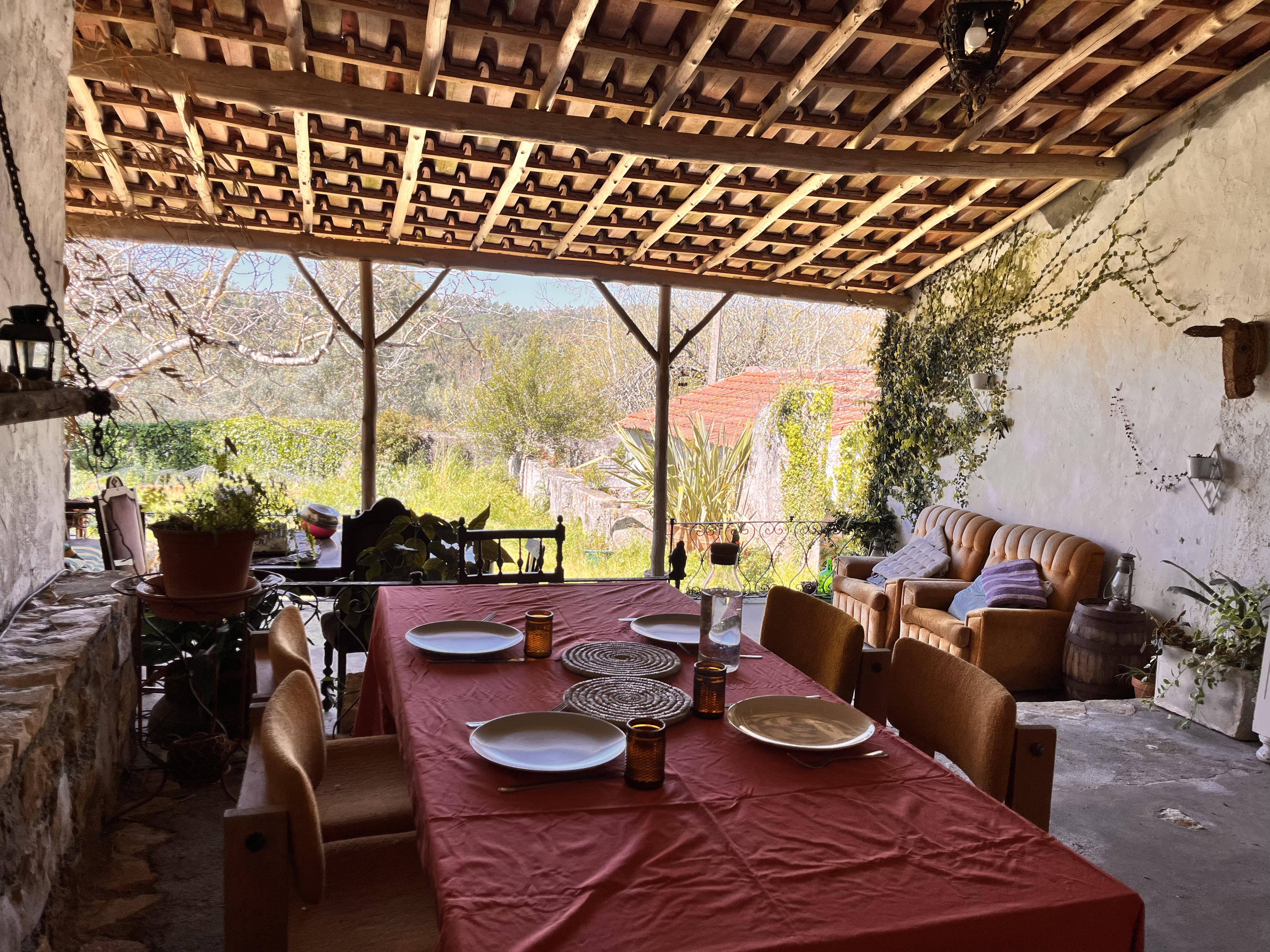
What Is Quinta da Carvalheira?
There is a category of coliving that sells the idea of nature, and then there is Quinta da Carvalheira, a coliving that has been nature's project since the 17th century.
Quinta da Carvalheira is a working farmhouse in the Soure municipality of the Coimbra District, central Portugal. Its founder and on-site resident, Inês, began transforming it in 2022 from a long-dormant family inheritance into something more intentional: a Centro de Aprendizagem e Regeneração, a Centre for Learning and Regeneration. The coliving programme launched formally in October 2025, but the land and the community around it had been building for three years before the first guests arrived.
The farmhouse itself dates to the 17th century, when it was the agricultural heart of the small village of Carvalheira de Cima, an olive press, a wine cellar, plantations spreading across the fields, work for many local families. It passed through generations of Inês's family. At one point it became a place of healing, where a village doctor, Dr. Pimenta, cared for the local community, body and soul, as the family describes it. Then, like so many rural Portuguese properties, it fell quiet as the family urbanised across the 20th century: Inês's grandmother left Soure for Benfica do Ribatejo, her mother settled in Lisbon, and Inês herself grew up there, distant from the rural life her family once lived.
The return came in 2022, in what Inês describes as a moment of profound personal change — weariness with the rush, stress, noise, and disconnection of city life, and a pull toward roots, nature, and self-knowledge. What started as a question about what a new chapter at the Quinta could look like became, over the following years, a deliberate rebuild: studying and practising regenerative agriculture, reviving ties with the surrounding village, building a bridge between what the farm had been and what it could become.
What she has built is organised around three explicit pillars: internal regeneration (personal growth, self-knowledge, mental clarity), community regeneration (shared living, local integration, mutual support), and nature regeneration(permaculture, organic growing, ecological practice). The coliving is one expression of this — the residential strand of a wider project that also runs retreats, workshops, and courses for the broader public.
This review covers what that actually means in practice — including the elements that don't appear on the booking page.
Quinta da Carvalheira is best for:
✓ Remote workers and digital nomads seeking genuine immersion in sustainable rural living
✓ People in a period of personal transition — looking for clarity, slowness, and rooted community
✓ Creatives, writers, practitioners, and researchers who need an inspiring, unhurried environment
✓ Anyone seriously interested in permaculture, regenerative agriculture, or ecological practice
✓ Solo travellers who want an instant, intentional community rather than a hotel
✓ Wellness-oriented travellers — yoga, Pilates, and self-knowledge workshops are woven into daily life, not bolted on
✓ Those who have wanted to
live, not just visit, rural Portugal, and mean that with some depth
Book a stay at Quinta da Carvalheira → 📍 Rua da Carvalheira 10, 3130-600 Soure, Coimbra, Portugal 📧 quintadacarvalheira10@gmail.com | WhatsApp: +351 915 717 510 🗓️ Schedule a conversation before booking
Why Quinta da Carvalheira Is Different
Most rural colivings are built on a simple premise: take a beautiful property, add fast internet, and market it to remote workers who want to see greenery through the coworking window. Quinta da Carvalheira starts from a different question — not "how do we accommodate remote workers in the countryside?" but "what does regeneration actually mean, and how do we live it day to day?"
The difference is structural. The coliving here is embedded inside a larger project of land and community revival. Simone — the resident cook and therapist, described by guests as a queen of culinary arts — prepares vegetarian meals using produce from the farm's own garden and from neighbouring growers. A weekly cooking rota for lunches means residents aren't passive consumers of an experience; they help maintain it. The permaculture gardens aren't decorative — they're the farm's ongoing work, and guests who want to learn are welcomed directly into them.
Inês, who founded and lives on the property, is by training a coach and by disposition an adventurer. The household around her includes Ana, who grew up in Soure and returned specifically to participate in regenerating her home region; Simone, the cook and therapist whose food guests describe in terms of wisdom rather than just flavour; and a rotating cast of Workaway volunteers — recently a Frenchman named Hugo, who bakes tarts and helps write the newsletter, and an Italian named Luigi, who brings, as the team puts it, his joy of living and a knack for solving any problem. This is not a hospitality team. It's a household, and guests become part of it.
The farm's non-human residents are just as woven into the identity of the place: free-roaming cats, chickens, ducks, an affectionate dog named Maya, a strong-willed rooster the team calls their "galo-cão" (rooster-dog), and a calm, watchful cat named Ragnar — described on the farm's own materials as their Lion King and the guardian of the property. Reviewers name the animals specifically, with enough frequency that it stops reading as a cute detail and starts reading as a real signal: a farm where the animals are part of the experience is a farm that's actually functioning as a farm, not performing rurality for an audience.
The distinction that matters is between a coliving that has nature as its backdrop and one that has nature as its purpose. At Quinta da Carvalheira, that distinction is explicit in how the space actually operates.
The Location: Soure, the Coimbra District, and the Terras de Sicó
Quinta da Carvalheira sits in the Soure municipality of the Coimbra District — at the intersection of two very different Portuguese landscapes. To the east: the limestone massif of the Serra do Sicó, rising to 553 metres, with karst cave systems, ancient oak and holm oak forest sheltering over 800 documented wildlife species, and trails of real character. To the west and north: the flat, river-laced agricultural plains of the Mondego basin, where flooded rice paddies turn the landscape emerald each spring.
Soure itself has medieval roots. Soure Castle, a fortified square that predated the conquest of Lisbon and has been listed as a Portuguese National Monument since 1949, watches over the town. The surrounding region is known for traditional pottery, wine and olive oil production, Rabaçal sheep's cheese, and a regional gastronomy built around chanfana (goat stew slow-cooked in red wine), fried eels from the local river system, and Carolino rice. The Terras de Sicó — the cultural and natural zone spanning Soure and five neighbouring municipalities — is crossed by the Rota da Luz heritage route and holds the Roman ruins at Rabaçal and the Sicó Fossil Museum at Santiago da Guarda.
Destination | Journey |
Soure town centre | ~5 km (bike or local bus) |
Coimbra (city, university, restaurants) | ~23–30 km — Bus 104 at the farm gate |
Pombal (town, services) | Bus 104 or 119 at the farm gate |
Conímbriga Roman Ruins | ~25 km from Coimbra |
Serra do Sicó trails and caves | On the doorstep |
Lisbon | ~2h by bus via Pombal or Coimbra |
Porto | ~1h30 by car or bus |
Coimbra Airport | ~17 km |
Figueira da Foz (Atlantic coast) | ~30–40 min by car |
The practical logistics for car-free residents are genuinely workable: Bus 104 (Pombal–Coimbra) stops roughly 400 metres from the farm gate, and Bus 119 (Soure–Alvorge) is also accessible. Bikes are free for guests. For larger shopping runs, the team organises a community car trip once or twice a week. Getting to Lisbon or Porto for a weekend takes planning but is achievable without a car.
Coimbra itself — home to one of Europe's oldest universities (founded in 1290), the Joanina Library, and its own distinct Fado tradition — is close enough for an easy day trip or a weekend escape, while the farm remains genuinely quiet and rural. Multiple reviewers describe the immediate environment as immersive in a way that surprised them, particularly given the proximity to the Coimbra urban area.
The Property: A 17th-Century Farmhouse as a Living Community
Quinta da Carvalheira is a single-property coliving — not distributed across a village, but contained within and around the historic farmhouse and its grounds. That gives the community a natural coherence: kitchen, common areas, garden, and bedrooms are all part of the same inhabited organism, with a stated capacity of 7–10 people.
The kitchen and dining area function as the genuine social heart of the community. Simone's cooking happens here, and the shared lunch rota makes the kitchen a daily gathering point rather than an optional amenity. Common areas are consistently described in reviews as clean, organised, and holding a "fantastic energy" — language that recurs often enough across independent reviews to read as accurate rather than formulaic.
The garden and land are the philosophical core of the project — layered permaculture beds, fruit trees guests pick directly from (figs and grapes both come up repeatedly in reviews), and animals moving freely through the grounds. Spring water sourced on the property is part of the quality-of-life proposition the team points to directly.
The coworking space is a dedicated room with fibre internet. Worth knowing honestly: independent listings flag that the setup is not fully ergonomic — proper desks or chairs may be missing in some configurations. If you need a dedicated monitor and an ergonomic chair for eight-hour work days, confirm the current setup directly with the team before booking. The fibre connection itself is confirmed and functional.
Yoga and Pilates sessions run weekly on the farm. Climbing — both outdoor walls on the property and free access to the gym at the Soure Climbing Centre — is included at no extra charge.
The Rooms and Pricing {#pricing}
All accommodation sits within the farmhouse itself: three private rooms and a six-bed dormitory.
Quarto Oliveira — Private double room, shared bathroom, desk, dresser, bed linens and towels included. Farm or field views.
Quarto Rosa — Single bed in a shared room (not a full dormitory), shared bathroom, desk, dresser, bed linens and towels included.
Quarto Figueira — Private double room, shared bathroom, desk, dresser, bed linens and towels included.
Dormitório Misto — Mixed dormitory, 6 beds (single or bunk), shared bathroom, desk, locker, bed linens and towels included.
Rates
Stay length | Private room | Dormitory |
Daily | From €51/day | From €22/day |
Weekly | From €339/week | From €148/week |
Two weeks | ~€600 | ~€260 |
Monthly | ~€1,290/month | ~€555/month |
Couples can book together for a supplement of approximately +€50/week. Discounts for longer stays are available on enquiry.
A pricing note worth flagging honestly: the farm's own website lists two slightly different booking tracks — Coliving(long-stay, weekly-rate emphasis) and Turismo Regenerativo (short-stay, daily-rate emphasis) — and the day-rate shown for the same room differs slightly between the two pages (Quarto Rosa shows €51/day on one and €34/day on the other). This is most likely a difference between the long-stay and short-stay tracks rather than an error, but it's worth confirming your exact rate directly with the team before booking, which they explicitly invite you to do.
What's Included
Coworking space with fibre Wi-Fi
All common areas and the social lounge
Weekly room cleaning
Garden produce and seasonal vegetables
Community lunch cooking rota
Weekly yoga/Pilates
Free bike use
Free access to the Soure Climbing Centre and outdoor walls
Participation in workshops and activities organised by the farm
The Team — and the Animals
Inês — Founder and on-site resident. A coach by training and an adventurer by disposition; the farm is, in a direct and literal sense, her family's land and her project of return.
Simone — Resident cook and therapist, described by guests as a queen of culinary arts and a gifted storyteller. Meals prepared by Simone, grown from the farm's own garden, are the single most consistently and warmly cited element across every independent review.
Ana — Grew up in Soure and joined the team part-time in late 2025, with a genuine investment in regenerating her home region.
Hugo and Luigi — Recent Workaway volunteers, from France and Italy respectively, who become part of daily household life for weeks or months at a time, contributing everything from baking and newsletter writing to woodcutting and garden work.
The animals, who appear in nearly every guest account: Maya (affectionate, playful), a strong-willed rooster the team calls their "galo-cão," Ragnar (the farm's calm, watchful Lion King and self-appointed guardian), and a family of free-roaming ducks. One reviewer's entire closing note read simply: "The animals are the best."
Activities, Workshops, and the Rhythm of Daily Life
On-farm experiences that recur regularly: mushroom foraging walks in the surrounding forest, weekly yoga and Pilates, pottery and craft sessions, permaculture introductions and hands-on garden work, self-knowledge retreats and coaching workshops led by Inês and visiting facilitators, and long shared meals built from the farm's own produce. These aren't optional add-ons; they're the texture of daily life, available to all residents.
Outdoor activities accessible from the farm: hiking the Serra do Sicó, cycling the Terras de Sicó on the farm's free bikes, climbing at the Soure Climbing Centre (included), and exploring the Algarinho-Gramatinha-Ariques Ecological Park.
Cultural day trips: Coimbra (Joanina Library, the historic university, Fado de Coimbra) by direct bus from the farm gate; the Roman Villa at Rabaçal and the Sicó Fossil Museum at Santiago da Guarda within the immediate region; Condeixa-a-Nova, Pombal, and Conímbriga — among the best-preserved Roman ruins in Portugal — all accessible without a car.
Seasonal community events are a genuine throughline rather than an occasional extra. Recent examples include forest-bathing and mushroom-identification walks, multi-day permaculture and agroecology weekends with visiting educators, a healthy Christmas-dinner cooking workshop, and a local Christmas market run in partnership with the parish council of Tapeus — bringing local businesses and the wider village directly onto the farm.
The Community: Regeneration as a Shared Project
The community model here is participatory in a way the coliving industry usually treats as a marketing term but that Quinta da Carvalheira operationalises with real rigour: the lunch cooking rota, shared cleaning, and many of the decisions about how the week is structured genuinely involve residents rather than delegating everything to staff.
This is the structure of a household, not a hotel, and it attracts a corresponding kind of guest — curious, open to depth, interested in sustainable living, often at a point in life where regeneration (internal as much as agricultural) is genuinely relevant. The age range reflected in reviews is broader than the typical digital-nomad demographic.
Inês appears by name in nearly every substantive review — as dynamic, friendly, and always willing to help the community. Simone is cited with equal warmth. These read as specific, considered observations rather than generic hospitality compliments, which is itself a signal about the quality of engagement guests are having.
Because the coliving programme only formally launched in October 2025, there isn't yet a multi-year track record of returning residents the way some more established rural colivings can point to. What exists instead is a tightly woven, very young household — still finding its operational rhythm, but unmistakably real.
What People Say
"My two weeks at Quinta da Carvalheira gave me a new perspective on the value of shared learning and community building and living in nature. I got so much from Inês, the founder who is also a life coach, the staff living there and the other colivers I met. It was a rare combination of peace, calm, and time to work on myself and my business — it's the same thing. I don't know of any other coliving in the world that offers the same depth and focus on personal and communal development, while also attending to our relationship with nature. It's gonna transform you at many levels." — Verified Google reviewer, May 2025
"I had an amazing stay at the Quinta. It's a green sanctuary where you can really find some peace. I was impressed by how they combine a wild nature vibe with such order and cleanliness. The coworking areas are beautiful and inspiring, each with a unique feel. It's the perfect spot to find yourself again, made even more special by the warm welcome from the hosts and their animals." — Verified Google reviewer, March 2025
"I spent two wonderful weeks here at Carvalheira! The farm has a beautiful energy, created and cultivated by the people who live in and care for this place. Inês is very dynamic and friendly, always willing to help the community. Simone nourished us with her presence and her wisdom through delicious food — it was also very healthy and fresh! We spent days having deep and pleasant conversations, eating fresh food from the garden, and picking delicious figs and grapes. We also made pots together, always with a spirit of caring for one another. Note: the animals are the best!" — Verified Google reviewer, December 2025
"Staying at Quinta da Carvalheira was an unforgettable experience. From the moment I arrived, I felt fully immersed in nature — surrounded by open fields, free-roaming cats, chickens, and ducks that bring life and joy to every corner. The Quinta's commitment to regenerative permaculture and sustainability is evident everywhere: from the layered garden beds to the meals prepared by Simone, using ingredients straight from their own garden. I left feeling inspired, grounded, and grateful." — Verified Google reviewer, December 2025
"A Quinta da Carvalheira é sem dúvida um local de constante transformação interna e externa... Onde aparentemente não acontece nada, acontece TUDO e mais alguma coisa. Mais que um lugar físico, é uma COMUNIDADE viva."(Quinta da Carvalheira is without doubt a place of constant internal and external transformation... Where apparently nothing happens, EVERYTHING and more happens. More than a physical place, it's a LIVING COMMUNITY.) — Verified Google reviewer, October 2025
"I took part in the mushroom-discovery walk and loved it! Inês has created something very special at Quinta da Carvalheira. I'll be back!" — Verified Google reviewer, November 2025
Consistent themes across reviews: the farm's animals are mentioned in almost every account as genuine members of the household; Simone's cooking is repeatedly cited by name as one of the most meaningful elements of any stay; the property's energy is described as calm, clean, and restorative; Inês's personal role in building the community is recognised specifically and warmly; and guests consistently express intent to return.
Honest critical notes: the coworking setup is functional but not fully ergonomic for every work style — confirm desk and chair specifics directly if that's a hard requirement. The space is small (7–10 residents), so community chemistry depends significantly on who else happens to be in residence during your stay. The participatory model (cooking rota, shared cleaning) is a genuine expectation, not a nominal gesture — guests wanting a fully serviced, hands-off experience should know this going in. And as with any project in its first year of operation, the depth and consistency of programming that older, more established colivings have built up over time is still developing here.
Pros & Cons
Pros
Authenticity of regenerative purpose. This isn't a property that adopted sustainability as a brand position. The land has been under active permaculture development since 2022, the food is genuinely grown on-site and sourced from neighbours, and the three-pillar framework — internal, community, and nature regeneration — is operative rather than decorative.
Simone's kitchen is a community in itself. The specificity and warmth with which reviewers describe the food — not just as sustenance but as an act of care — is a real signal of what this place gets right.
The farmhouse and land are the genuine article. A 17th-century working farm, fruit picked straight from the trees, animals moving freely through the grounds, spring water on the property. Reviewers repeatedly use the word "immersion" because there's nothing curated standing between them and the environment.
Remarkable value at the entry level. From €148/week (or €555/month) for a dormitory bed in a functioning regenerative farm community near Coimbra — meals, activities, coworking, yoga, bikes, and climbing access all included — is hard to match in the Portuguese coliving market.
The team genuinely lives there. Inês, Simone, Ana, and the rotating Workaway volunteers aren't staff who commute in. They live on the property and participate in its daily life, which is the irreducible variable that separates a household from a managed product.
Female-led, with a clear ethical orientation. Founded and driven by Inês, with an explicit values framework around regeneration, community, and sustainability.
Genuinely good bus access for a rural location. Bus 104 stops roughly 400 metres from the gate, running between Pombal and Coimbra — meaningfully better public transport provision than most rural coliving equivalents.
The participatory model builds real community. The cooking rota and shared cleaning aren't just practical arrangements — they're community-building mechanisms that tend to produce the kind of connection the coliving industry promises and rarely delivers.
Cons
Coworking ergonomics aren't fully confirmed. Dedicated ergonomic chairs and monitors may not be available in every configuration. Worth a direct conversation before booking if this matters to your work.
A genuinely young coliving. October 2025 isn't very long ago. The land, the team, and the philosophy are strong fundamentals — but the operational polish that accumulates over years of hosting hasn't fully developed yet.
Small scale means variable community. At 7–10 residents maximum, the social texture of any given stay depends almost entirely on who else is in residence. Extraordinary when the mix works; thinner when it doesn't.
The participatory model isn't for everyone. Cooking rota and shared cleaning are genuine expectations. Guests wanting a fully serviced, show-up-and-leave experience are likely to find this friction rather than enrichment.
Limited on-site dining options outside the community kitchen. Soure's restaurants are roughly 5 km away. For evenings when communal cooking isn't on the programme, options require some planning or transport.
Pricing presentation has a minor inconsistency between the site's two booking tracks for the same room (see pricing note above) — easily resolved with a quick message to the team, but worth knowing before you book.
Winter and off-season are genuinely quiet. A small farm in central Portugal in January, with few residents, is a substantially different experience from the busier summer months. Guests who need social density to feel energised should plan accordingly.
How Quinta da Carvalheira Compares
Factor | Quinta da Carvalheira | Rural Europe Coliving (avg.) | Urban Portugal Coliving |
Founding philosophy | ✓ Regeneration (land, community, self) | Environmental branding | Productivity / networking |
Land and food | ✓ Working farm, on-site produce | Garden as amenity | None |
Resident team | ✓ Lives on-site, multi-skilled | Manager on call | Staff, not community |
Entry price | ✓ From €148/week (dorm) | From ~€200/week | From ~€600/month |
Community model | ✓ Participatory household | Managed programming | Events-based |
Bus access | ✓ Routes 104 & 119 at gate | Variable | Walking distance to transit |
Coworking ergonomics | Not fully confirmed | Varies | Usually good |
Capacity | 7–10 (micro) | 10–30 | 20–100+ |
Workshops/retreats | ✓ On-site, integrated | Rare | Very rare |
Female-led | ✓ Yes | Uncommon | Uncommon |
Quinta da Carvalheira isn't competing with productivity-first colivings, and doesn't try to. Its value proposition — daily life measured in the flavour of garden tomatoes, the silence of the Serra do Sicó, and long conversations over Simone's cooking — occupies territory that almost no urban coliving, and few rural ones, can credibly claim.
The Bigger Vision: Regenerating Rural Portugal
Quinta da Carvalheira sits inside a larger problem: the depopulation and cultural hollowing-out of rural Portugal that has accelerated across several generations of urban migration. Inês's own story — raised in Lisbon, returning to restore her family's land — is both personal and emblematic. Ana, who grew up in Soure and chose to come back, carries the same arc.
The project carries an implicit thesis: that the knowledge, money, and energy of the urban professional class can return to rural places not as tourism but as genuine inhabitation — and that the regenerative framework is what makes that inhabitation meaningful rather than merely logistical. The coliving isn't just accommodation for remote workers; in the team's own framing, it's an experiment in what rural Portugal can become when a new kind of inhabitant arrives with intention.
Staying here in 2026 means participating in that experiment at an early stage. Worth knowing before you book, because it changes what the experience actually means.
Who Is Quinta da Carvalheira For — and Who Should Skip It
A strong fit if you:
Want a genuinely small, intimate household coliving rather than a larger community campus
Are drawn to permaculture, regenerative agriculture, or hands-on learning about growing food
Value authenticity and real local roots over polish and curated branding
Want central Portugal access — Coimbra, Sicó, the Atlantic coast — without big-city costs
Are comfortable with a vegetarian kitchen and a genuinely rural, bus-and-bike transport reality
Are excited by the idea of joining something still being built, rather than a mature, fully systematised operation
Probably not the right fit if you:
Need a large, established community with a long track record of returning residents
Require a private bathroom — all current room types share bathroom facilities
Need frequent, spontaneous access to a city centre or nightlife
Have dietary needs incompatible with a vegetarian kitchen
Want a fully professionalised, large-team operation rather than a small, founder-run household
The clearest test: if the idea of working from a desk with a forest view, eating a meal grown a few metres from your table, and spending the afternoon learning to build a no-dig vegetable bed from people who are rebuilding their own family's land genuinely appeals — Quinta da Carvalheira is built for exactly that.
Final Verdict: Is Quinta da Carvalheira Worth It?
For the right kind of resident — yes, unambiguously, with some nuance about what "right" means here.
Quinta da Carvalheira doesn't fit the standard coliving template. It isn't a productivity hub in a pretty location. It isn't a wellness retreat with a desk in it. It's a living farm community built around the proposition that regeneration — of land, of relationships, of the self — is a daily practice rather than a weekend theme.
Simone's cooking, rooted in the farm's own soil, is not a feature. It's an argument that quality of life is edible. The mushroom foraging walks, the pottery sessions, the long lunches, the sound of ducks in the yard — these aren't amenities. They're the facts of a specific kind of life, and for guests who've been looking for exactly those facts, they're genuinely extraordinary.
The limitations are real: the coworking setup isn't fully ergonomic for every work style, the community is small and its chemistry dependent on who else is in residence, the programme is young, and the participatory model requires actual participation. None of these are failures — they're the honest conditions of a real household rather than a managed product.
For a remote worker mid-transition, a creative seeking grounded inspiration, or anyone who's told themselves they want to understand sustainable living rather than just admire it from a distance — Quinta da Carvalheira makes a direct argument: the countryside isn't a retreat from your life. It's a place where a different version of your life is already happening, and you're invited to join it.
The garden figs are waiting. The Serra do Sicó trails start a short bike ride from the gate. Simone is probably in the kitchen with something from the garden, and Inês is probably in the orchard. Coimbra, with its 13th-century university and one of the most beautiful libraries in the world, is reachable on the same bus that stops 400 metres from the front door.
That's a genuinely good deal for €339 a week.
Book a stay at Quinta da Carvalheira →
FAQ
What is a regenerative coliving? At Quinta da Carvalheira, regeneration operates across three dimensions: internal (personal growth, self-knowledge, coaching), community (shared living, local integration, mutual support), and nature (permaculture, organic growing, ecological practice). The coliving is embedded in this project rather than added onto it.
What's the minimum stay? Pricing is built around week-long stays, from €148/week (dormitory) or €339/week (private room), with longer-stay discounts available on enquiry. Two-week and monthly options exist (from ~€260/€555 dormitory, ~€600/€1,290 private). Contact the team to discuss your specific timeline.
What's included? Private room or dormitory bed, access to the dedicated coworking space with fibre Wi-Fi, all common areas, weekly room cleaning, garden produce and seasonal vegetables, the community lunch cooking rota, weekly yoga/Pilates, free bike use, free access to the Soure Climbing Centre, and participation in all farm-organised workshops and activities.
Is the internet reliable for remote work? Fibre internet is confirmed, in a dedicated coworking room. Ergonomic chairs and monitors may not be available in every configuration — confirm directly with the team if that's a hard requirement.
Can I get there without a car? Yes. Bus 104 (Pombal–Coimbra) stops about 400 metres from the farm gate; Bus 119 (Soure–Alvorge) is also accessible. Pombal and Coimbra both connect onward to Lisbon (~2h) and Porto (~1.5h) by national bus or train. Bikes are free on the farm; community car runs handle larger shopping trips once or twice weekly.
What's the community model? Participatory — residents are expected to contribute to the household, including a shared lunch cooking rota and shared cleaning. This is closer to a household than a hotel, and the community reflects that.
Is there a minimum commitment or trial period? The team recommends a conversation before booking to align expectations and confirm the fit is right — schedule one via their calendar link rather than booking blind.
Is the space open year-round? Yes, across all four seasons — with the caveat that the quieter winter months are a substantially more solitary, focused experience than the busier summer period.
How do I book? Via quintadacarvalheira.com/en/coliving, by email at quintadacarvalheira10@gmail.com, or by WhatsApp at +351 915 717 510. The team encourages a conversation before booking.
Last updated: 2026 | Based on firsthand research, site content from quintadacarvalheira.com, the team's Workaway host listing, verified guest reviews via coliving.community and Google Maps, and independent regional research on the Coimbra District, Soure municipality, and the Terras de Sicó.