Hub Feenix Review (2026): The Sanatorium-Turned-Creative Coliving in the Forests of Meltola — Raasepori, Finland
An honest look inside the 15,000m² former sanatorium an hour from Helsinki where digital nomads, artists, and volunteers cowork, sauna, and cook vegetarian dinners together — the studios, the pricing, the vegetarian-only rule, and one recurring complaint the operator's own site doesn't mention.
What Is Hub Feenix?
Hub Feenix is a 15,000m² former tuberculosis sanatorium in Meltola, a hamlet within the Raasepori municipality of southern Finland, converted since 2020 into what its own materials describe as "a sanctuary for creation, connection & renewal." It's simultaneously an artist residency, a digital nomad coliving and coworking space, a retreat and events venue, a makerspace, and a small permanent village — all run by a registered non-profit cooperative, Osuuskunta Hub Feenix.
It's roughly an hour from Helsinki by train or car (about 75km), in genuinely rural forest surroundings near a lake, in the small town of Karjaa (Karis). The pitch, consistent across every part of its sprawling web presence, is "conscious living" of a specifically Finnish, wellness-and-craft-oriented flavour: coworking by day, sauna on Wednesdays, strictly vegetarian shared meals, artist studios and a serious makerspace (woodworking, ceramics, 3D printing, textiles), and a community built from a rotating mix of digital nomads, artists-in-residence, international volunteers, and roughly 20 full-time residents.
This review is built from Hub Feenix's own extensive site network — the main site (hubfeenix.fi), the dedicated Digital Nomads site (nomads.hubfeenix.fi), and its About/Values/Code of Conduct pages — cross-checked against independent listings (Coliving Compass, Reviewed by Artists, Facebook, Venuu.fi) to see where the picture holds up and where it gets complicated. It mostly holds up. But there is a specific, credible, independently sourced complaint below that the operator's own materials don't mention, and it deserves a place in your decision, not a footnote.
Hub Feenix is best for:
✓ Artists, makers, and craft-driven creatives who want serious workshop/studio access (ceramics kiln, 3D printing, wood and metal shop, sewing room, printing press)
✓ Digital nomads who want a genuinely rural, forest-immersed base with structure, community, and a sauna — not a party hostel
✓ Retreat organisers (yoga, dance, meditation, wellness) needing halls and accommodation for groups up to 100
✓ People comfortable with a strictly vegetarian household and defined quiet hours
✓ Anyone drawn to a genuinely unusual building — a converted 20th-century hospital with 6+ event spaces and a lot of history in its walls
📍 Högbenintie / Högbensvägen 30, 10350 Meltola, Raasepori, Finland 📞 +358 50 533 7881 · info@hubfeenix.fi 🌐 hubfeenix.fi · nomads.hubfeenix.fi (digital nomads) · residency.hubfeenix.fi (artists) · volunteers.hubfeenix.fi
The Building and Its Story
The origin story is genuinely unusual and worth knowing, because it explains a lot about the property's scale and character. Raisa Kaipainen and Torsten Ruger bought the old Meltola sanatorium at auction on 1 April 2020 — April Fools' Day — after just three days' notice, apparently surprised to have won. They founded a non-profit cooperative, Osuuskunta Hub Feenix, to run it, and began converting a former hospital building into a mixed-use creative and wellness village.
By their own account (as of roughly mid-2024), the property had reached 6 event spaces and 100 beds, with an established international artist residency and volunteer programme. The stated long-term vision is considerably larger: the full 15,000m² building in active use, 25 permanent studio artists, 10–15 artists in residence, 10–15 digital nomads, 6–12 volunteers year-round, a café open on weekends and events, small-scale vegan food production space, 30% solar power with partial geothermal heating, and roughly 50 people living in a "Hub Feenix Village" on the grounds. Some of this is realised; a meaningful amount is still aspirational — worth knowing if you're picturing the fully built-out version described in the vision statement rather than what currently exists.
Location and Getting There
This is a genuinely rural property, and the operator is upfront about it rather than overselling proximity to Helsinki.
From Helsinki:
~1 hour by train or car (~75km) to Karjaa (Karis), the nearest town
From Karjaa to the campus:
a further 15-minute car or bus ride, or a scheduled pickup (€10) that Hub Feenix can arrange if you tell them your train time
By plane:
fly into Helsinki-Vantaa, then train — about 2 hours door to door; last connecting train departs roughly 21:00
By ferry:
Tallinn–Helsinki (~2 hours, €20–30) or Stockholm–Helsinki/Turku (~10 hours, €40–70)
Groceries:
nearest supermarkets (Lidl, K-Market, S-Market) are in Karjaa — a 30-minute bike ride, 15–20 minute bus, or 10-minute shared car
Local mobility:
a manual, community-run shared car exists, available to approved resident-drivers; non-drivers can join trips by buying ride tokens (€2.50 each, one per journey) rather than driving themselves
The honest read: this is not a "coworking space with occasional forest views" — it's a real countryside relocation for the duration of your stay. If you need frequent city access, factor in the train schedule (last departure from Helsinki is early evening) and the extra 15-minute leg from Karjaa station.
Accommodation: The Digital Nomad Wing
Digital nomads stay in a dedicated wing, separate from artist residency quarters and volunteer housing, accommodating up to 9 people.
Room types and pricing:
Single room:
€650/month
Double room:
€850/month
A separate independent aggregator (Coliving Compass) lists a slightly different headline figure — "starting at €644/month" — which is close enough to be the same offer described with minor rounding or a different snapshot in time, but worth confirming the exact current rate directly rather than treating either figure as gospel.
Each room comes with a bed, one or two built-in closets, an in-room desk and chair, a seating chair, a bedside table, and fresh linens. Bathrooms are shared, separated by gender, two showers each, with a washer in a separate utility room and drying racks available in-room. There's a fully equipped shared kitchen (full-size fridge/freezer, oven, dishwasher, toaster, moka pot, small coffee press) plus a second smaller kitchenette with a stovetop, and two lounge areas with sofas, one including a dining table and kitchenette.
Minimum stay: two weeks, per the independent Coliving Compass listing.
A refundable €100 cash deposit is collected on arrival and returned at checkout if the room is left in good condition.
Important, specific policy: Hub Feenix is a strictly vegetarian environment — guests are asked not to bring or cook meat or fish anywhere on the premises. This isn't a soft suggestion; it's stated plainly and repeatedly across the site. If you eat meat and cook regularly, this is a real lifestyle constraint to weigh, not a minor detail.
Quiet hours are enforced: 22:00–07:00 on weekdays, midnight–09:00 on weekends.
Coworking
Coworking is included for digital nomad residents and described as 24/7 access with 200 Mbps Wi-Fi (a nomad-site listing separately cites 200/100 Mbps down/up), with a dedicated work area in the Nomad Wing plus additional coworking nooks shared across the wider campus.
For non-resident coworkers — locals, day visitors, or people not staying in the nomad wing — the main Hub Feenix site publishes separate coworking rates:
Option | Price |
Floating desk (shared coworking room) | €120/month or €10/day |
Private office, single | €200/month |
Private office, double | €350/month |
Meeting & project rooms | From €20/hour |
Included with coworking: high-speed internet, shared kitchen access, lounge and terrace areas, and access to the built-in creative/nomad community. Note that this published coworking rate card sits on the main hubfeenix.fi site and doesn't appear to be identical to the nomad-wing accommodation pricing above — the two are separate products (day/month desk access vs. full room-and-board living), so don't conflate them when budgeting.
Studios (For Artists and Makers)
Separate from both the nomad wing and coworking, Hub Feenix rents dedicated art studios:
Studio Type | Size | Price |
Standard studio | ~15m² | €170/month + electricity |
Large studio | ~30m² | €340/month + electricity |
Tiled wet-room studio | Varies | €150–200/month + electricity |
Smaller/non-standard layouts | Varies | From €100/month + electricity |
Studios include Makerspace access (with a contribution — not automatically bundled free), shared lounges and terrace, some attached bathrooms, and personal sinks in most rooms.
The Makerspace itself spans wood and metal workshops, a textiles and sewing room, a ceramics studio (wheels and kiln), a 3D printing/electronics/digital creation area, an audio/video studio, and a printing press — a genuinely serious multi-discipline facility, not a token corner with a 3D printer.
Retreats and Events
Separately from long-stay coliving, Hub Feenix hosts third-party retreats, workshops, and conferences for groups up to 100 people, across six named event spaces (The Hall, Mandala Room, Ahimsa Hall, Lotus Room, Earth Room, The Loft). Capacity ranges from the Large Hall (~120 people, professional lighting and sound) down to intimate 8–15-person rooms.
Retreat accommodation runs from dorms and shared rooms up to private suites, and plant-based catered meals are available when included in a retreat package. Hub Feenix also hosts its own recurring public programming, including an annual Wonder of Life Festival and a monthly Artist Talk where resident artists present current work.
Community and Daily Life
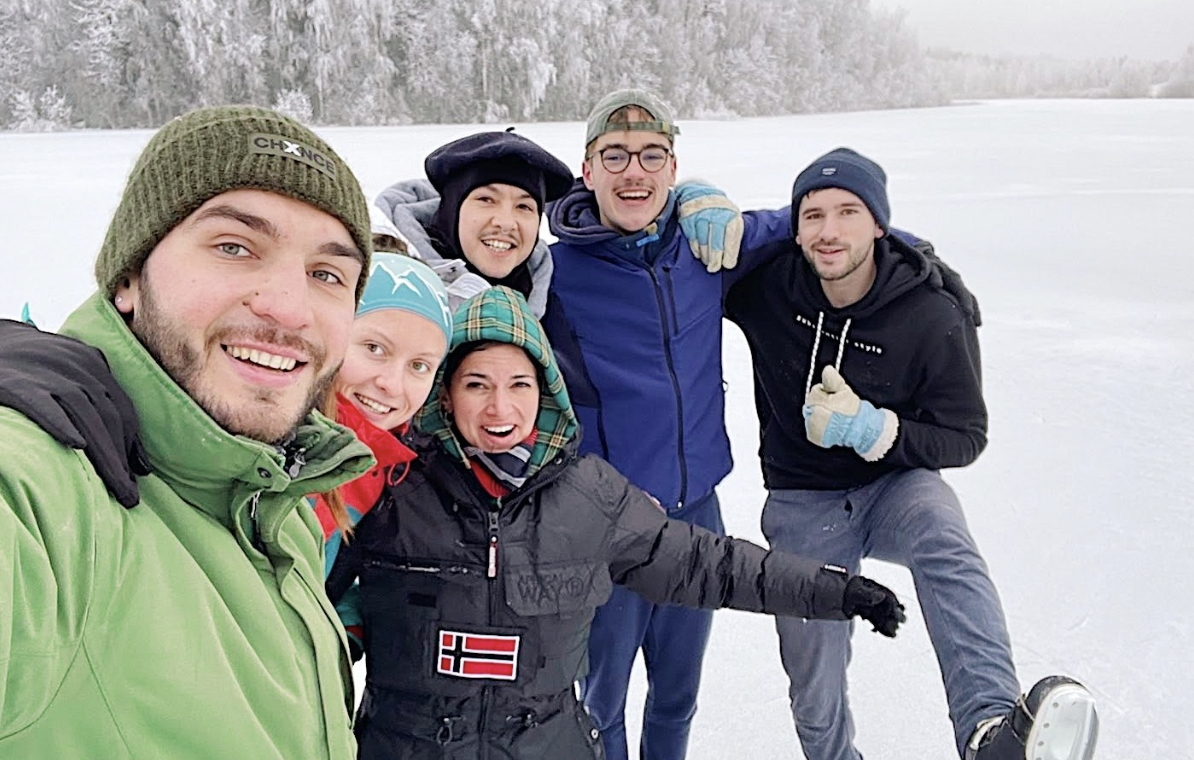
The community is deliberately mixed: digital nomads (up to 9 in the dedicated wing), 8–10 artists-in-residence rotating monthly, roughly 20 full-time year-round residents, and volunteers (recruited partly via Workaway) — putting the total on-campus population at roughly 30–40+ people at any given time, per the operator's own FAQ.
Structured community rituals recur weekly and monthly: a Wednesday sauna night, a monthly Artist Talk, and informal terrace dinners, movie nights, and fireside chats organised via a community Signal group chat that new arrivals are asked to join before they arrive.
Amenities beyond the coworking/studio spread: a gym, a climbing wall, a home cinema, a campfire pit, a treatment/wellness salon (offering shiatsu and acupuncture, per the crew bios), a music room, a volleyball field, and an outdoor pizza oven. A small on-site boutique sells natural cosmetics (the Farfalla product line, packed on-site by a crew member), and a vegetarian café operates only during events and weekends — not a daily amenity, which is a genuine practical distinction from a typical coliving communal kitchen/café model.
Values, Code of Conduct — and a Point of Tension Worth Naming
Hub Feenix's published Values and Code of Conduct are unusually explicit for a coliving operator, worth quoting because they set real expectations: "non-violence is observed in both actions and words," "everyone has the right to feel safe," "any kind of physical interaction always requires the consent of both parties," and residents are asked to practise "the skill of taking and giving feedback, as well as communicating directly without anger or manipulation." Quiet hours, a vegetarian-only food policy, and minimal, mindful alcohol use are also formal Code of Conduct items, not just FAQ trivia.
This is genuinely worth setting against the record below.
The Honest Record: What Independent Reviews Say
This is the section worth reading most carefully, because the picture from independent sources is not uniformly glowing — and a meticulous review shouldn't smooth that over.
On the strongly positive side: An independent artist-residency review platform (Reviewed by Artists) shows Hub Feenix's residency programme rated 5.0/5 across 5 reviews, with guests describing staff and volunteers as some of the kindest they'd encountered across multiple residencies, praising the sense of space even with a dozen-plus artists and around 20 volunteers on site, and specifically noting they wished they'd booked a longer stay from the start.
A separate independent aggregator, Coliving Compass, lists Hub Feenix's Google rating at 4.5/5 across 56 reviews — a solid, credible independent signal — and its AI-summarized theme analysis of those Google reviews highlights a "magical atmosphere," "friendly and helpful staff," and specifically praises the vegetarian food as a standout.
On the negative side, and this is the part worth sitting with: The same Google-review theme analysis flags two recurring, specific concerns that don't appear anywhere in Hub Feenix's own materials:
A health and safety complaint about mold.
One detailed account describes living in one of the property's rental houses in October 2025 and experiencing nausea, itchy eyes, and breathing problems affecting multiple family members, attributing it to mouldy indoor air, and separately alleging that volunteer construction work took place in environments with mold and fungal spores without proper safety equipment.
A complaint about interpersonal community dynamics
— describing a "hierarchical approach" to community interactions, discouragement of direct communication in what are meant to be safe spaces, and, in the same account, allegations of personal attacks and "violent communication" when opinions diverged.
It's worth being precise about what this evidence does and doesn't establish. This is drawn from a single detailed account surfaced by an independent aggregator's review-summary tool, not a pattern independently confirmed across multiple sources the way, say, the vegetarian-food praise or the general "friendly staff" theme is. It should be weighed as one credible, specific, named-date account — not dismissed, but also not treated as representative of the average stay implied by a 4.5/5 aggregate rating. What makes it worth including prominently rather than as a footnote is the direct tension with Hub Feenix's own explicitly published non-violence and safety commitments — if this is an aberration, it's an aberration from stated values the operator has put in writing; if it's a pattern, it matters more, not less, given those same commitments. Either way, anyone considering a longer stay — and particularly anyone considering volunteering on construction or renovation work — should ask directly about current housing/building condition and volunteer safety practices before committing, rather than relying on either the glowing or the critical account alone.
Costs: What It Actually Costs, Beyond Rent
Per Hub Feenix's own FAQ, rent generally does not include heating/electricity, which is billed separately based on personal usage:
Cost | Estimate |
Nomad Wing, single room | €650/month |
Nomad Wing, double room | €850/month |
Heating/electricity (self-metered) | Typically €60–80/month, billed at €0.15/kWh |
Refundable deposit | €100 (cash, on arrival) |
Coworking floating desk (non-resident) | €120/month or €10/day |
Private office (non-resident) | €200/month (single) / €350/month (double) |
Standard art studio | €170/month + electricity |
Large art studio | €340/month + electricity |
Karjaa pickup from train station | €10 |
Shared-car ride token | €2.50/journey |
Overnight guest fee (1–2 nights) | Small fee, exact amount not published; extra for a private room |
No air conditioning is provided or needed — the operator notes Finland's climate makes it unnecessary, and the property leans instead into heating infrastructure (wood chip heating currently, with stated plans to add solar and partial geothermal).
Pros and Cons
Pros
A genuinely unusual, spacious, and characterful building
— a converted sanatorium with 6+ event spaces and a real depth of history, not a generic modern coliving block.
A serious Makerspace
— ceramics, woodworking, metalwork, 3D printing, textiles, printing press, audio/video — a real draw for hands-on creatives, not a marketing bullet point.
Explicit, published values and code of conduct
, including consent, non-violence, and direct-communication norms — a level of stated intentionality about community culture that's rare to see this explicit.
Genuinely rural, forest-immersed setting
with a lake nearby, hiking trails, and a real disconnect from urban noise — repeatedly the thing independent reviewers single out as restorative.
Structured community rituals
(Wednesday sauna, monthly Artist Talk) that create low-effort, recurring points of connection rather than relying purely on organic mixing.
Reasonably priced relative to Helsinki-area cost of living
, especially the studio and coworking rates, and the accommodation pricing is transparent and published — unusual among comparable properties in this review series.
Strong independent artist-residency reputation
(5.0/5 across available reviews on a dedicated residency review platform) and a solid 4.5/5 Google aggregate.
Cons
A specific, credible independent complaint about mold and building condition
in at least one rental property associated with Hub Feenix, alongside a separate allegation about unsafe volunteer construction conditions — genuinely worth asking about directly before a long stay or volunteer placement.
A separate independent account alleging hierarchical, sometimes hostile interpersonal dynamics
within the community — in direct tension with the operator's own published non-violence and safety commitments, and worth weighing even though it's a single detailed account rather than a confirmed pattern.
Strictly vegetarian household
— a genuine lifestyle constraint for meat-eaters who cook regularly, not just a menu preference.
Genuinely rural and train-schedule-dependent
— last connecting trains from Helsinki run early evening; this isn't a spontaneous city-adjacent stay.
The café is only open during events and weekends
, not daily — a real difference from a typical always-on communal coliving kitchen/café model.
The property's own long-term vision (25 studio artists, 50 permanent village residents, full 15,000m² active use) is still partly aspirational
— worth confirming what's currently built out versus planned before assuming the fully realised version described on the About page.
Minor pricing inconsistency
between Hub Feenix's own nomad-wing rate (€650/mo single) and an independent aggregator's listed rate (~€644/mo starting) — small, but worth confirming the current exact number directly.
Who Hub Feenix Is For — and Who Should Skip It
A strong fit if you:
Are an artist or maker who wants serious hands-on workshop access, not just a quiet desk
Want a genuinely rural, forest-based digital nomad base with real structure (sauna nights, Artist Talks, quiet hours) rather than an unstructured party hostel
Are comfortable with, or actively want, a strictly vegetarian household
Are organising or attending a retreat and need halls plus accommodation for a group
Value an operator that publishes explicit community values and a code of conduct, and are comfortable weighing that against at least one independent account describing a gap between those stated values and lived experience
Probably not the right fit if you:
Need frequent, spontaneous access to a city — the train schedule and 15-minute Karjaa connection make this a real commitment, not a day-trip base
Eat meat regularly and cook for yourself — the vegetarian-only policy is strictly enforced indoors
Are specifically considering a volunteer construction/renovation placement and haven't independently confirmed current safety practices and building condition first
Want a coliving with an always-on café or communal dining culture — Hub Feenix's café operates only during events and weekends
FAQ
What is Hub Feenix? A 15,000m² former sanatorium in Meltola, Raasepori, Finland (about an hour from Helsinki), converted since 2020 into a mixed-use creative and wellness village: a digital nomad coliving/coworking wing, an artist residency, a Makerspace, retreat/event halls, and a small permanent community, run by a non-profit cooperative.
How much does it cost to stay as a digital nomad? €650/month for a single room, €850/month for a double, in the dedicated Digital Nomad Wing (up to 9 residents). Heating/electricity is billed separately (typically €60–80/month), plus a refundable €100 cash deposit on arrival. A separate independent listing cites a slightly different "starting at €644/month" figure — confirm the current exact rate directly.
Is there a minimum stay? Two weeks, per independent listings.
Is the food vegetarian? Yes — strictly. Guests are asked not to bring or cook meat or fish anywhere on the property.
What's included in coworking? 24/7 access, 200 Mbps Wi-Fi, shared kitchen access, lounge/terrace areas, gym, sauna (Wednesdays), and access to the wider creative community. Non-resident coworking desks are separately priced at €120/month or €10/day; private offices from €200/month.
Can I rent an art studio without staying as a resident? Yes — standard studios (~15m²) run €170/month + electricity; large studios (~30m²) run €340/month + electricity, plus Makerspace access with a contribution.
How do I get there? About an hour from Helsinki by train or car (75km) to Karjaa (Karis), then a further 15 minutes to the campus by car, bus, or arranged pickup (€10). Flying into Helsinki-Vantaa adds roughly 2 hours door to door via train.
Is Hub Feenix well-reviewed? Broadly yes — a 4.5/5 Google rating across 56 reviews per an independent aggregator, and a 5.0/5 rating across available reviews on a dedicated artist-residency review platform. However, the same aggregator's review-theme summary also surfaces a specific, detailed independent complaint about mold/building-condition health issues in at least one associated rental property, and a separate account describing hierarchical and at times hostile community dynamics — worth asking about directly, especially for longer stays or volunteer placements.
Are kids and pets allowed? The space is described as geared toward adults focused on work and creativity, though the FAQ notes a general fondness for both — worth confirming your specific situation directly rather than assuming either way.
What are quiet hours? 22:00–07:00 on weekdays; midnight–09:00 on weekends.
How do I book? Via the dedicated Digital Nomads site (nomads.hubfeenix.fi/booking) for coliving, or the general Contact Us form on hubfeenix.fi for studios, coworking, or retreat inquiries.
Last updated: 2026 | Based on Hub Feenix's own web presence across hubfeenix.fi, nomads.hubfeenix.fi, and its About/Values/Code of Conduct pages, cross-checked against independent sources including Coliving Compass (Google review aggregation), Reviewed by Artists, and Facebook. Where independent sources surfaced information not present in Hub Feenix's own materials — including both strongly positive and critical accounts — that information is presented explicitly as independently sourced, with the caveat that a single detailed account is not the same as a confirmed pattern.